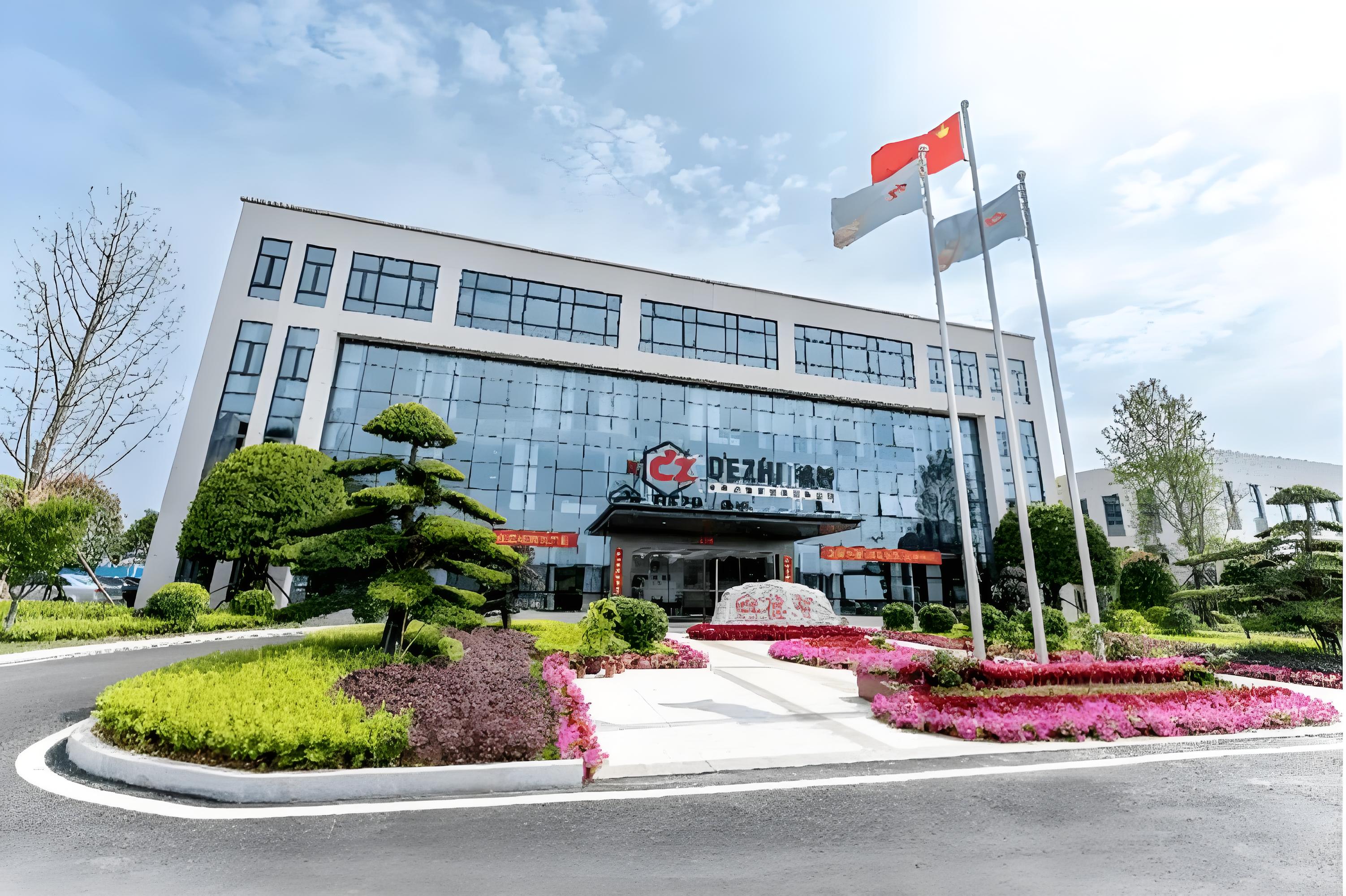
Dezhi New Materials, a leading Chinese supplier of SiC etching components, leverages SIPM/PLM to achieve effective R&D management.
More
Project Background
Zhuzhou Ouke CNC Precision Tools Co., Ltd. (hereinafter referred to as the "Company"), established in January 1996 with a registered capital of 158,608,108 RMB, is a high-tech enterprise specializing in the R&D, production, and sales of cemented carbide products and CNC tool products, possessing independent R&D and innovation capabilities. On December 10, 2020, the company was successfully listed on the STAR Market of the Shanghai Stock Exchange, becoming the first STAR Market-listed company primarily engaged in cemented carbide cutting tools. The company's technology for cemented carbide saw blade products ranks among the top in China and has been awarded the title of "National Manufacturing Single Champion Product". It ranks second in the country for the output of CNC blades. After years of technical exploration, the company has mastered the key technology system throughout the entire process of cemented carbide manufacturing, tool manufacturing, and integrated application, successfully solving the control problems of performance stability and precision consistency of cemented carbide. The company can stably produce complex structure cemented carbide tools such as ultra-fine low-cobalt, ultra-thin, functional gradient, etc. Products like its independently developed "OP series PVD coated inserts for stainless steel machining" and "OC series CVD coated inserts for steel machining" have reached international advanced levels, capable of replacing similar imported products.
The company always adheres to the R&D philosophy of "doing improvements close to the market and leading the market with R&D", forming a technical R&D team composed of chief technical experts, R&D engineers, new product realization technologists, and expert consultants. It also deeply engages in industry-academia-research-application cooperation with multiple universities including Central South University and Sichuan University. By the end of 2022, the company had obtained authorization for 115 domestic patents, including 15 invention patents, 63 utility model patents, and 37 design patents, along with 2 German utility model patents. It participated in the formulation of 3 national standards and 3 industry standards, and was involved in several science and technology and industrialization projects under the Ministry of Science and Technology, National Development and Reform Commission, Hunan Provincial Department of Science and Technology, among others. Recognized as a national-level specialized, refined, distinctive, and innovative "little giant" enterprise, a national-level high-tech enterprise, and a Hunan Province new material enterprise, it was approved to establish a post-doctoral research workstation and recognized as the Hunan CNC Tool Coating Engineering Technology Research Center. The company's "OKE" brand has been consecutively selected as a "User Satisfaction Brand" in the Fourth and Fifth Cutting Tool User Surveys, and multiple self-developed products have won the "Golden Blade Award" (Cutting Tool Innovation Product Award) and the "Rongge Technology Innovation Award".
Adhering to the corporate value of "Responsibility Forges Excellence", the company closely seizes the opportunities presented by the high-quality upgrade of Chinese manufacturing, focusing on innovation, deepening product development, optimizing services, and building brands. It aims at the localization of high-end CNC tools and import substitution, promoting the upgrading of product structures towards deep processing and system integration, achieving product "strengthening chains", "supplementing chains", and "extending chains". The goal is to develop itself into a leading domestic and internationally renowned comprehensive supplier and system service provider of CNC tools.
Project Objectives
Through the implementation of the PLM system, the project team systematically reviewed and optimized Ouke’s business operations and design & development processes. Focusing on project management, data management, document management, process management, change management, data integration, task management, and knowledge management, the project established standardized and normalized data practices to ensure the completeness, accuracy, and consistency of product and business data. This initiative aims to reduce product costs, enhance R&D efficiency, and ultimately achieve integrated R&D and manufacturing, full product lifecycle management, and platform- and module-based product architectures.
The PLM implementation enabled comprehensive management of projects, R&D product data, general product data, manufacturing processes, and coding standards, while also establishing associated supporting resource databases.
Through PLM deployment, the company standardized its product development processes and the management of process documentation—including inputs, outputs, and review records—ensuring all documents are complete, systematically archived, and easily accessible. This provides full traceability and auditability throughout the development lifecycle and significantly strengthens project management capabilities.
The PLM system centralized the control of technical documentation, with all printing and distribution of engineering documents driven by a single, authoritative data source within the system.
A unified database of material grades, part numbers (drawings), and other key libraries was established through PLM, facilitating feature reuse in NX design environments and substantially improving design efficiency and speed.
The PLM system was integrated with the company’s ERP and OA information systems and connected with both 3D and 2D data flows, thereby enabling seamless end-to-end data exchange across the enterprise’s digital ecosystem.
Through on-site research and blueprint design conducted by the PLM project team, SIPM’s implementation team developed a precise, holistic business process model tailored specifically to Ouke’s cutting tool operations.
_1768274458457.png)
Ouke Cutting Tools Business Management Model Panorama
R&D Product Management
Following PLM implementation, a product-centric R&D process management system was established, integrating key elements such as qualification samples, model samples, formulations, material grades, and drawings. This system enables real-time recording and full traceability of all process-related information, effectively meeting Ouke’s functional requirements for managing prototype parts and model-part design in R&D.
In alignment with Ouke’s R&D management approach, products are categorized into two main libraries: the “Material/Model R&D Product Library” and the “Steel/Full-Carbide/Ultra-Hard Product Library.”Products in the “Material/Model R&D Product Library” are managed within PLM through defined R&D stages linked to their respective formulations.Products in the “Steel/Full-Carbide/Ultra-Hard Product Library” continue to be managed using a modular design methodology.
_1768275948053.png)
Material/Model R&D Product Library
_1768276646332.png)
Steel/Full-Carbide/Ultra-Hard Product Library
Products are showcased through multiple views based on their types: Bar Material/Cermet Product Library, Engineering Technology Research Institute Product Library, CNC Product Library, Steel Product Library, Ultra-Hard Product Library, and Full-Carbide Product Library.
_1768281949356.png)
Product Classification Management
On the product association page under "R&D Stage," data such as sample parts and temporary material grades for each stage are maintained and linked to the Parts & Components Library (Sample Library) via material codes.
During the R&D process, three sequential stages—qualification samples, model samples, and model parts—are generated alongside formulation development. Each stage corresponds to a specific formulation scheme that includes both the formulation and associated manufacturing processes.
For qualification samples and model samples, a dedicated "Stage Outcome Summary" section has been added at each prototyping phase. The content of this summary is automatically populated based on the "Is Outcome Part" attribute field defined for each sample part.
_1768282493956.png)
Modular Management of Discrete Products
BOM Management
After implementation, standardized management of BOMs and materials for discrete products is achieved, along with the management of design data flow and BOMs within the PLM system.
The electronic document management for product design, centered around the BOM, allows for quick indexing of any node (part or component) within the product structure. This includes accessing related 2D engineering drawings, 3D model diagrams, and other technical documentation, facilitated by the BOM navigation provided internally by the system.
Attributes for 3D and 2D design software are defined, enabling the direct extraction of BOMs and associated information directly from the design software.
_1768283000505.png)
BOM Manager Administration
Part & Component Management
The system enables electronic management of parts and components, effectively eliminating issues such as multiple part numbers for the same item or multiple items sharing a single part number. Users can directly retrieve associated drawings and technical documents by searching for a specific part or component, and the system also supports full management of part change history.
Additionally, a centralized Material Grade Library has been established within the PLM system to uniformly manage official material grades. A standardized approval workflow for material grades and model numbers has been implemented. Once a part (model part) is confirmed, a material grade/model number approval process is initiated from its association page. Upon approval completion, the system automatically updates the corresponding attributes—such as material grade, model number, and coating grade—for the product and the part (model part), and simultaneously adds the new material grade to the Material Grade Library.Furthermore, trial-manufactured parts are linked to their respective process routes and formulations based on defined formulation schemes, ensuring transparent and clear R&D process management.
_1768283112413.png)
Part and Component Classification Management
_1768283890351.png)
Parts and Components Linked to Formulation Schemes (Process Routes)
Engineering Drawing and Document Management
The system supports both individual and bulk uploading of drawings and documents, enabling users to accurately store files in their corresponding management directories. It also establishes associations between documents and parts/components by leveraging the mapping between electronic file names and internal part numbers within the system.Standardized document templates are created within the system, which users can directly invoke to automatically launch the appropriate authoring software for creating or editing drawings and documents. This functionality also enables reference-based design across related files.
_1768284335835.png)
Technical Document Management
_1768284803856.png)
2D Drawing Management
_1768285288982.png)
3D Drawing Management
_1768285820064.png)
Document Template Management
_1768286034339.png)
Standard Document Management
_1768286124257.png)
3D Drawing–Part Association Management
Project Management
The system has successfully implemented a comprehensive project management framework, enabling core functionalities such as project monitoring, progress alerts, and statistical analysis. It also provides management of the completion status of project deliverables through a defined output document checklist.By classifying projects and establishing standardized templates, the company has achieved and standardized project management practices. The system supports real-time monitoring of project progress, automated early warnings for schedule deviations, and effective control over timeliness and accuracy of deliverables.This implementation enhances transparency in project planning and data, and enables centralized management and easy retrieval of all project outputs.
_1768286664606.png)
Project Classification Management
_1768287165546.png)
Project Management Template
_1768287608261.png)
Project Instance
_1768288208538.png)
Project Monitoring and Management
_1768288904223.png)
Project Statistical Analysis Management
Coding Management
Through this implementation, encoders have been established in the system for various objects—including products, parts/components, and technical documents—enabling effective coding management across all entities.
This approach effectively prevents issues such as "multiple codes for a single item" or "multiple items sharing one code," ensuring the uniqueness of materials. It also helps avoid redundant design and procurement of materials.
_1768289154718.png)
Encoder Management
Design Software Integration Management
Through the management of design software interfaces, seamless data flow between 3D/2D CAD tools, electronic design software, and the PLM system has been established, enabling seamless integration of design data between the design environment and PLM. Relevant item information is automatically extracted from the design software via these interfaces.
2D Design Software Integration:The 2D CAD interface automatically analyzes the internal relationships among all drawings within a specified directory. Based on the structural information of a complete drawing set, it creates the product BOM in one operation and establishes associations between the BOM and individual drawings. A dedicated drawing information maintenance interface—provided by the integration—drives updates to title blocks and parts lists directly within the drawings.
3D Design Software Integration:Integration with 3D CAD software enables automatic extraction of parts and BOMs through the 3D design interface. This establishes and manages associations among parts, their corresponding 3D models, engineering drawings, and BOM structures within the PLM system.
_1768290148093.png)
Integration of 2D Design Software with PLM
PDF Factory
By configuring dedicated approval workflows for engineering drawings and Office documents, the system enables electronic signing of technical documents and drawings. This optimizes traditional review and approval processes, reduces enterprise costs, enhances document security, and lays the foundation for a paperless workflow.
_1768290487010.png)
PDF Signing
ERP Integration Management
Through implementation, the PLM system now generates a Production BOM (PBOM) for each product, including associated materials, BOM structures, and process routes. The production BOM is then transferred to an integration middleware table for ERP consumption.At the moment of transmission, the system captures the currently effective BOM, materials, and process routes for the selected product and writes all corresponding materials, the complete BOM structure, and the default process routes into the integration middleware table, which is subsequently accessed by the ERP system.
_1768290894066.png)
Generate PBOM
_1768291226029.png)
Release to ERP
OA Integration Management
Through implementation, the PLM system now transmits part-associated documents—such as Cutting Test Request Forms—from PLM to the OA system.
_1768291524232.png)
Cutting Test Business Process Diagram
_1768291654944.png)
Document Transfer to OA
Knowledge Management
Through implementation, a knowledge base framework has been established within the system’s Knowledge Management module. The knowledge base is organized by category and governed by role-based access controls. Its content is continuously enriched through ongoing contributions of experience summaries and accumulated insights.
_1768291952767.png)
Knowledge Base Management
Change Management
After the implementation of the SIPM/PLM system, all change management activities are fully executed within the PLM system. This ensures that only one authoritative version of data exists after each change. Every change is governed by a rigorous approval workflow, with complete process records automatically archived. Changes are clearly documented and fully traceable throughout their lifecycle.
_1768292546478.png)
Part Change History
Process Management
This implementation has established standardized workflows and introduced an electronic review and approval mechanism, eliminating previous issues caused by manual processes—such as human errors and omissions—and paving the way for a paperless office environment.
_1768293179496.png)
Review and Approval Workflow Management
Summary:
Data standardization is an indispensable step in enterprise digital transformation and a prerequisite for entering the data-driven era. Every organization’s data governance journey is unique, requiring careful consideration of its specific organizational structure, culture, environment, and available resources.
Successful practices cannot be simply copied. Leveraging SIPM’s professional service experience, organizations no longer need to start data standardization from scratch. Instead, they can build upon proven foundations—standing on the shoulders of others—to avoid redundant efforts, gain broader perspectives, and achieve greater and more sustainable progress.
The success or failure of data management ultimately hinges on having a rational and effective organizational structure and well-defined processes. Therefore, greater emphasis should be placed on establishing supporting organizational frameworks and workflows for data quality management. The core R&D management philosophy embedded in SIPM/PLM—from design through production—precisely reflects Ouke’s holistic approach to digital transformation, providing a robust foundation for organizational growth.