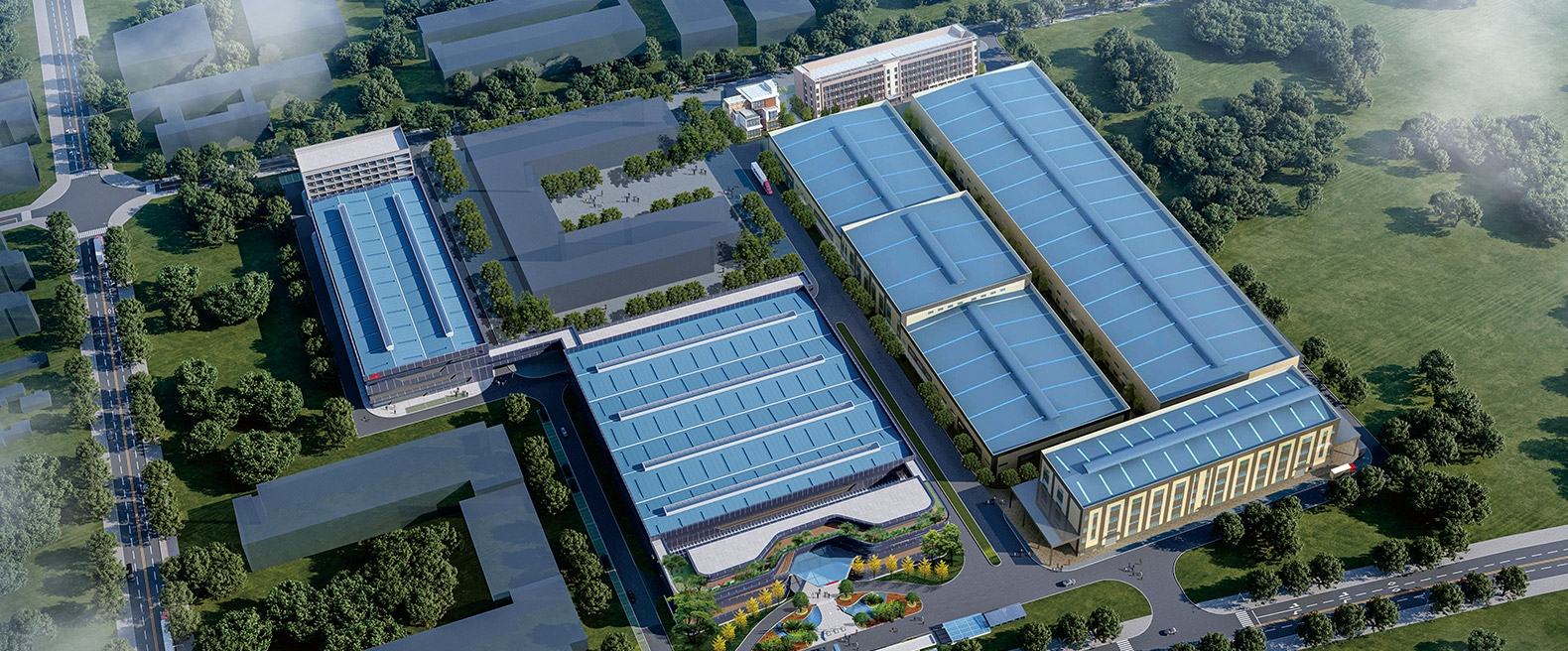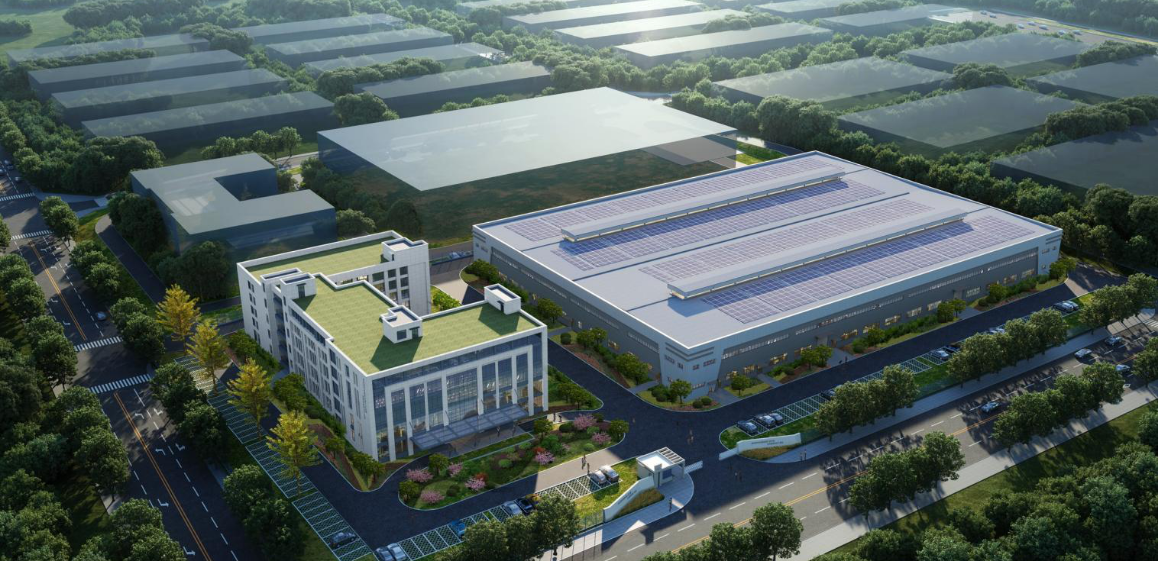
Hunan Sute Automation utilizes SIPM/PLM to manage its project R&D processes and R&D data.
More
Company Profile
Zhejiang Erg Technology Co., Ltd. (listed on the NEEQ) was founded in October 1994 with a registered capital of RMB 60.43 million. It is a nationally recognized high-tech enterprise specializing in the manufacturing of components and complete systems for cooling solutions.
The company primarily develops and produces cooling systems for ultra-high-voltage (UHV) large power transformers rated above 220 kV, large electric motors exceeding 1.5 MW, railway locomotive cooling systems, petrochemical equipment cooling systems, and intelligent control systems. The “Erg” brand has been honored as a “Zhejiang Famous Brand” and a “Well-Known Trademark of Taizhou City.” Its products have received multiple awards, including the Provincial Science and Technology Progress Award, Provincial First-of-its-Kind Equipment Recognition, and Provincial High-Quality Manufacturing Product designation. Erg’s core products enjoy an excellent reputation within their respective niche markets.
The company has successively obtained certifications for ISO 9001 Quality Management System, ISO 14001 Environmental Management System, IRIS (International Railway Industry Standard), CRCC (China Railway Certification Center), and CE. A rigorous quality assurance system has been established to ensure synchronized progress in production safety and product quality, guaranteeing both high-quality output and cost-efficient operations. With high technological content and superior product quality, Erg adheres to the principle: “We only introduce internationally advanced technologies and only manufacture domestically leading products,” striving to cultivate top-tier employees, achieve world-class management, and build an outstanding enterprise.
Guided by its noble mission—“Building an exceptional brand, revitalizing China’s national industries, and nurturing the spirit of Zhejiang entrepreneurs”—Erg is committed to the research, development, and sales of heat exchange technologies and equipment. Through a unique management philosophy that integrates military discipline, academic cultivation, family values, and humanistic care, the company aims to harmonize corporate growth, employee development, and social benefit, making its due contribution to realizing the “Chinese Dream.”
Project Objectives
Through the implementation of the SIPM/PLM project, the following objectives are to be achieved:
Design Management: Construct a clear and comprehensive product family tree. Utilize interfaces from drawing design software to directly extract data, ensuring that parts, Bill of Materials (BOM), and drawings enter the PLM system simultaneously. This ensures seamless integration where parts, drawings, and technical documents are fully interlinked, making queries convenient.
Coding Management: Systematize the company’s coding rules within the system to unify the coding of parts, technical documents, and other design process assets.
Knowledge Management: Leverage the PLM system's knowledge document management capabilities to categorize knowledge documents systematically. Manage these documents alongside standard documents through the system for efficient, organized access and utilization.
System Integration: Achieve integration between the PLM system and ERP to bridge the data flow from the design phase to backend business operations, ensuring coherence and accessibility of data across all stages.
Through on-site research and blueprint design, and by combining Erg Technology’s actual business requirements with Sipu’s extensive consulting experience, the Sipu implementation team has developed a precise R&D management solution tailored specifically for Erg Technology.
_1775712236648.png)
Erg Technology Business Panorama
1. Product Management
Implement categorized and centralized product management, providing the R&D department with a unified platform for product data management.
Establish modular components based on system products, enabling clear management of all associated parts, documents, and technical files, thereby achieving standardized and integrated management.
Use the product Bill of Materials (BOM) as the central link in structural design to ensure effective control over all design data.
Integrate CAD design tools with the PLM system through interface programs, enabling CAD-driven BOM management and online drawing control. This ensures a single, authoritative version of each drawing. Through these software interfaces, parts, BOMs, and drawings are managed as an integrated whole—any drawing revision automatically triggers corresponding updates to the associated BOM and components.
_1775713944155.png)
BOM Management
Establish a historical document archive to collect and manage legacy drawings, enabling quick and easy access and retrieval.
2. Change Management
By streamlining and standardizing workflows, the company’s engineering change process has been formalized within the system, ensuring that all technical changes are controlled and compliant with standardized procedures. All changes are centrally managed in the system, where electronic documents are always up-to-date and valid. The entire change process—including related documents and approval nodes—is fully traceable.
All system data files can be linked to their corresponding change history records, allowing users to query the complete change history for any given item.
_1775714927873.png)
Change Management Standardization
3. Coding Management
Implement unified coding for materials and technical documents, establishing a standardized coding system to prevent the occurrence of "one item, multiple codes."
Through the implementation of SIPM/PLM, the company has institutionalized a material and technical document coding system aligned with its management requirements. Automated coding via SIPM/PLM ensures "one item, one code," effectively eliminating issues such as duplicate codes for the same item, multiple items sharing the same code, and non-standardized coding practices.
_1775715498219.png)
Coding Rules Standardization
_1775716520881.png)
Invoke coding rules to generate codes
4. Knowledge Management
Establish an enterprise knowledge repository and a standard document library to enable knowledge sharing and inheritance.
Leverage the robust knowledge management capabilities of SIPM/PLM to build an enterprise-level knowledge base, facilitating systematic knowledge accumulation and real-time sharing, thereby ensuring efficient knowledge transfer and continuity across the organization.
_1775717784431.png)
Knowledge Base Management
_1775718708386.png)
Standard Document Management
5. Integration Management
Achieve integration between PLM and ERP.
The PLM system serves as the authoritative data source for materials, BOMs, and process information. Design teams maintain their respective business data within PLM, which is then uniformly transmitted to ERP, eliminating redundant and repetitive data maintenance across systems.
_1775719163829.png)
PBOM Release Management
Summary:
The successful implementation of the SIPM/PLM system at Erg Technology has provided an efficient R&D management platform for product development, significantly improving designers’ work efficiency.
By establishing modular components based on product systems and assigning design tasks according to modules, the company has laid a solid foundation for modular design. Using the Bill of Materials (BOM) as the central link, an integrated management approach has been established, promoting standardized and normalized management of product development data.
The standardization and visual tracking of engineering change processes have made these changes controllable and fully traceable.
Knowledge base management enables the accumulation and real-time sharing of corporate knowledge, establishing a strong foundation for knowledge inheritance within the organization.
By publishing the Production BOM (PBOM), the company has effectively connected materials and BOM data, truly streamlining the data flow across product development and management. This ensures data consistency and enhances the overall efficiency of information utilization within the enterprise.