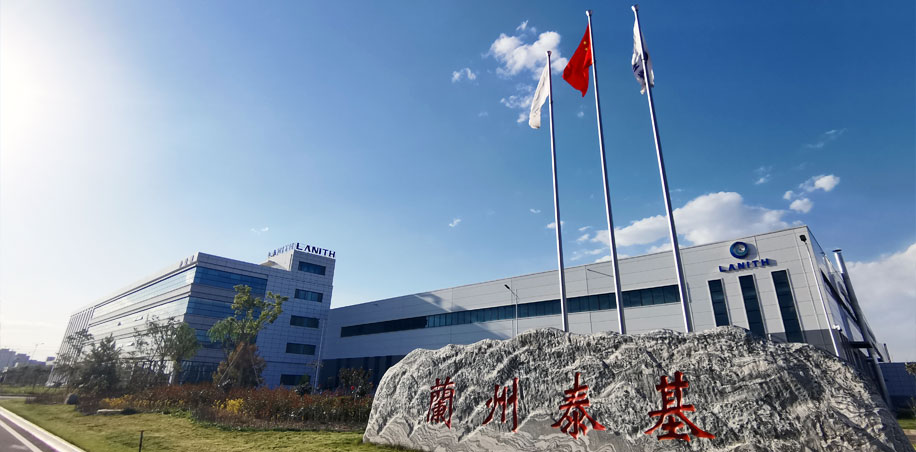
Lanzhou Taiji, a leading enterprise in large-scale ion therapy systems, has leveraged SIPM/PLM to build its R&D management platform.
More
Project Background
Suzhou Zumax Medical Technology Co., Ltd., established in 2005, is a leading manufacturer and service provider of surgical microscopes and clinical optical diagnostic instruments. Recognized as a National High-Tech Enterprise, a National Gazelle Enterprise, a Jiangsu Provincial Private Science and Technology Enterprise, a Jiangsu “Specialized, Refined, Differentiated, and Innovative” (Zhuan Jing Te Xin) Little Giant Enterprise, and a Demonstration Enterprise for Commercialization of Scientific and Technological Achievements in the Southern Jiangsu National Pilot Zone for Technology Transfer, Zumax has built a strong reputation for innovation and excellence.Guided by its core values—“Innovation through Technology, Customer-Centricity, Integrity, and Long-Term Vision”—Zumax serves customers in over 70 countries and regions worldwide.
The company is deeply committed to the 21st-century clinical medicine paradigm of “microscopy, minimally invasive procedures, and precision,” with a clear vision: to become China’s benchmark in the global microscopic medical equipment industry. Zumax has played a pioneering role in promoting clinical microscopy—particularly in dentistry—witnessing and driving the entire journey of dental microscopy in China from its inception to widespread adoption, thereby establishing itself as the market leader in this specialized segment.
Adhering to a “people-first” philosophy, Zumax continuously invests in employee growth and professional development, fostering a corporate culture rooted in mutual trust, shared progress, and relentless pursuit of excellence—all aimed at delivering exceptional value to its customers.
Project Objectives
Through the implementation of this project, Zumax Medical aims to optimize its R&D system across three key dimensions—systems, processes, and management—to enhance digital maturity, enable collaborative product development, and re-engineer and standardize related business workflows. The overarching goal is to achieve standardized, unified, and reliable product data management. Key objectives include:
Process Standardization in PLM: Embed the entire product development process into the PLM system, strictly controlling Work Breakdown Structure (WBS) planning, project activities, and their defined inputs and outputs to ensure alignment with internal and industry standards throughout project execution.
Material Standardization: Establish enterprise-wide standardized management of all materials by creating centralized libraries for standard parts, common components, and electronic components.
Unified Material Coding System: Implement a consistent, enterprise-level material coding scheme within the PLM system to achieve “one code for life” (end-to-end traceability), providing robust data support for downstream systems such as manufacturing and ERP.
Standardized BOM & Material Governance: Enforce rigorous application workflows for materials and BOMs, promoting standardized BOM management. Building upon a unified enterprise product data model, continuously advance modular and standardized technical design practices.
Single Source of Truth for Data: Ensure data uniqueness by establishing the PLM system as the authoritative source. Achieve bidirectional, embedded integration between design tools (3D CAD, 2D CAD, ECAD) and PLM to guarantee accuracy, consistency, and integrity of product data.
Controlled Change Management: All data modifications within the system must follow a strict change control process, ensuring full traceability, compliance, and closed-loop management from initiation through implementation.
System Integration & Data Interoperability: Integrate PLM with adjacent enterprise systems—including ERP, OA, and MES—to eliminate data silos and enable seamless, real-time data exchange across the product lifecycle.
Collectively, these objectives lay the foundation for a digitally driven, agile, and scalable innovation platform that supports Zumax Medical’s strategic growth and global competitiveness.
_1776132407872.png)
Zumax Medical Business Panorama
Project Management
Standardized project management practices and templates have been unified. The PLM system enables end-to-end project lifecycle management, embedding the product development process into the system. Template-based WBS (Work Breakdown Structure) allows for rapid planning, ensuring standardized project planning and execution, and guaranteeing that all documents and development deliverables are recorded and traceable.
Completeness of project deliverables is ensured through output completeness checks—such as task output constraints, phase-specific data outputs, and overall project data outputs—verifying that all required outputs are fully delivered.
_1776133290367.png)
Project Process Management
Material Management
After the implementation of the SIPM/PLM project, material management was enhanced with SIPM/PLM’s material (3F) characteristic attribute management. Characteristic attributes for each material category were clearly defined, and classification-based rules for material description concatenation were established, enabling automatic generation of standardized descriptions and ensuring data consistency.
Through the PLM system, a duplicate-check mechanism for key material attributes was introduced during the material creation process. This effectively reduces the occurrence of “one item, multiple codes,” significantly improving the standardization, reusability, and traceability of material information.
_1776134531116.png)
Material Duplicate Verification
The system automatically classifies materials by category, making material management clearer and significantly facilitating engineers’ identification and use of materials.
Product Management
With the product at its core, an effective document management system has been established, and a real-time completeness checklist of product-related documents is automatically generated. Different departments or teams, based on their respective responsibilities and modular assignments, collaboratively build BOMs in parallel within the PLM system, enabling concurrent engineering and seamless design collaboration.
BOM Management
Using BOM as the link, it associates all data and documents throughout the product development process, ensuring that all product data can be effectively and conveniently accessed. The BOM is integrated with the drawings, forming a cohesive whole. After a drawing is changed, it can quickly drive corresponding modifications to the related BOM and materials, avoiding duplicate work.
To quickly understand the differences between two BOMs, a differential comparison can be performed, allowing users to flexibly choose the method of comparison according to their specific needs.
_1776135407333.png)
BOM Difference Comparison
Process Management
The process foundation library serves as the cornerstone of process management. Starting with centralized data management and data standardization, the PLM system has established various foundational libraries. All process-related data is organized and stored in these libraries according to defined standards, enabling centralized and consistent management.
_1776136366758.png)
Process Foundation Library
By establishing a comprehensive Process Foundation Library, standardized management of process data in the PLM system has been achieved. When creating process routes, engineers can quickly and accurately retrieve the required data from the foundation library, enabling efficient generation of process routes.
_1776137243088.png)
Process Route
Unified Coding System
By establishing a company-wide unified material coding rule, unique identifiers are assigned to core data objects such as projects, products, materials, technical documents, and change orders. This ensures a “one-item-one-code” principle, guaranteeing consistency and traceability of the coding system across the entire business process.
_1776138530061.png)
Coding Management
Change Management
The PLM system enables end-to-end digital management of the entire change lifecycle. Through centralized control, it ensures the uniqueness and accuracy of data versions after changes. Rigorous electronic workflows standardize approval and execution steps, while automatically preserving complete change records and historical archives to establish a fully traceable, closed-loop process.Additionally, the system supports assigning specific change tasks by department, facilitating real-time tracking of implementation status and ensuring efficient, seamless cross-departmental collaboration.
_1776144189215.png)
Change Management
_1776145123426.png)
Change History
Process Management
As the foundation of the digital platform, it implements standardized workflows across all modules within the PLM system—including material management, design management, process management, change management, and task management—ensuring seamless and consistent process execution throughout the platform.
_1776145956545.png)
With the system’s built-in review and approval workflow, drawing documents can seamlessly flow electronically from creation through review to final approval. The completed electronic signatures ensure the legal validity and traceability of the documents. This not only enables efficient collaboration but also significantly reduces office costs associated with printing and physical archiving, making it a core component of paperless operations.
_1776151126835.png)
Drawing Signature
Document Management
The PLM system centrally stores and clearly categorizes all drawings and documents in a unified repository, significantly reducing human errors caused by decentralized management and greatly improving retrieval efficiency. Additionally, the system structurally links technical documents to associated products, materials, and other relevant items, supported by granular permission controls to ensure accurate, timely, and secure document sharing.
_1776152935759.png)
Technical Document Library
System Integration
By integrating with the OA system, pending review and approval tasks are synchronized, reducing the need to switch between systems and thereby improving work efficiency and accelerating approval response times.
_1776153669037.png)
PLM-OA Pending Tasks
By breaking down the barriers between PLM, ERP, and MES systems and using PLM as the authoritative source of data, standardized and unified BOM and process data are established, providing robust support and assurance for downstream business systems.
_1776154004764.png)
Integration of BOM and Process Routes with ERP and MES
Summary:
Zumax Medical’s PLM project is centered on the core principles of “digitizing data” and “standardizing processes.” By establishing a digital management platform that spans the entire product development lifecycle, the company has unified the online management of materials, BOMs, and manufacturing processes on a single platform—eliminating version confusion and significantly improving design efficiency.
PLM has enabled Zumax Medical to transition from experience-driven, offline workflows to data-driven, online operations, laying a robust digital foundation for future scalable innovation and global expansion.