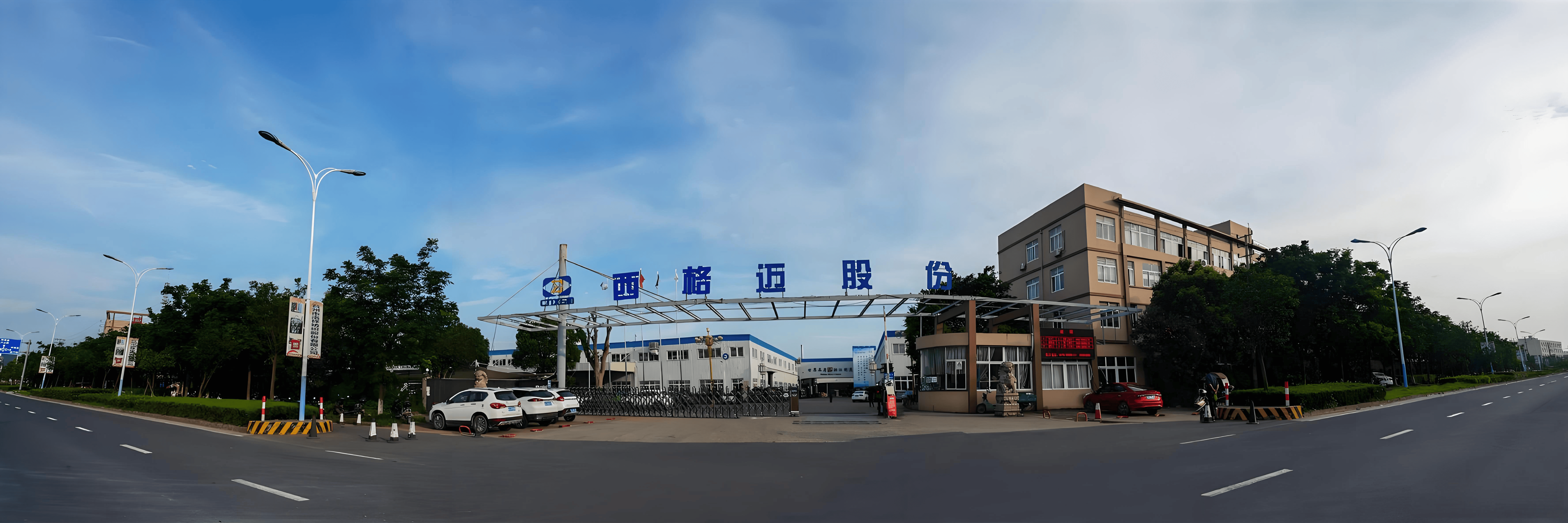
Sigmai utilizes SIPM/PLM to digitize and manage experimental processes and workflows.
More
Project Background
Taizhou Aoxingna Machinery Co., Ltd., established in September 1995, is a specialized manufacturer of automotive steering and suspension system components. Since its inception, the company has adhered to the business philosophy of "people-oriented," "technology-driven," and "good faith and teamwork spirit" to promote comprehensive quality management, implementing ISO9000 international standards and on-site "5S" management practices. The company has already passed the ISO9001:2002(E) international quality certification and is preparing to apply for QS9000 certification to ensure that its product quality aligns with international standards. Currently, the company produces over 100 varieties of products, including tie rod ends, suspension ball joints, cross rods, complete tie rod assemblies, main control arms, auxiliary control arms, and control arm assemblies, covering models from Toyota, Honda, Mitsubishi, Nissan, Mazda, Isuzu, Audi, Volkswagen, Peugeot, Opel, Mercedes-Benz, Ford, Kia, and more. These products are exported to Southeast Asia, Europe, the Middle East, and South American markets, enjoying high popularity among domestic and international customers.
Project Objectives
To meet the customized needs of numerous domestic and international clients and accelerate product research and development cycle management, the implementation of a Product Lifecycle Management (PLM) system holds significant importance for Taizhou Aoxingna's management and operations. Through the SIPM/PLM project implementation, the following objectives will be achieved:
1. Establish a Clear and Complete Product Lineage: By utilizing a two-dimensional drawing interface design, directly extract materials, BOMs, and drawings into the PLM system to establish an integrated process design platform. This will enable the association of process routes, material quotas, process documents, and basic process data with products, thereby enhancing process design efficiency.
2. Facilitate Enterprise Information Flow: Achieve standardized and consistent data transmission between the ERP system (materials, BOMs, process data), streamline and solidify product change management processes, and ensure traceability of all technical data, aligning more closely with quality management system standards.
3. Build a Knowledge Base: Accumulate organizational process assets, ensuring the accuracy, completeness, standardization, and security of product data. Transition from reliance on individuals to reliance on documentation and processes.
After jointly reviewing Taizhou Aoxingna's overall design business processes, both project teams have integrated modules such as product management, component management, BOM management, process management, design software interface integration, change management, knowledge base management, standardization management, and coding management into a unified platform.
_1761804484719.png)
Figure 1: R&D Business Management Panorama
Business Data Management
(1) Product Management: Centered around the product BOM, enabling organic management of materials, drawings, BOMs, and technical documents.
_1761804795345.png)
Figure 2: Product Classification
(2) Component Library Management: New materials are automatically classified according to coding rules to form a component library. At the same time, a selection library of company-standard parts is built for the convenience of design personnel to directly utilize.
_1761805591462.png)
Figure 3: Component Library
(3) BOM Management: Centered around the design BOM, integrate all design data in a structured manner to achieve effective control and management of all design data.
_1761806463932.png)
Figure 4: Design BOM
(4) Process Management:
_1761807186427.png)
Figure 5: Standard Process Library
_1761807721105.png)
Figure 6: Process Foundation Library
_1761808841511.png)
Figure 7: Process Route
(5) Design Software Interface Integration: Through interface integration, the business data flow between the design software and the PLM system has been connected, achieving seamless integration of design software with PLM design data.
_1761809146130.png)
Figure 8: Interface Model Library
(6) Change Management: All changes are centrally managed within the system. Electronic documents in the system are always up-to-date and valid. The change history is traceable, and historical versions of documents can be accessed as needed. Product change records are clear and controllable.
_1761809646473.png)
Figure 9: Change Management
Basic Data Management
By leveraging the SIPM PLM system to manage various foundational databases, the standardization level of the product design base library has been significantly improved. The PLM platform enables engineers to independently generate codes for components, with coding rules systematically standardized and managed. Design and R&D knowledge bases, document templates, standard documents, process designs, reports, and other resources are unified and managed on a single platform.
(1) Coding Management: The implementation of SIPM/PLM has established a coding management system for materials and technical documents that meets the company's management requirements. Through SIPM/PLM's automated coding function, a unique code is assigned to each item (one item, one code).
_1761809729522.png)
Figure 10: Coding Management
(2) Knowledge Base: By utilizing the knowledge management module of SIPM/PLM, the company has established a centralized knowledge base to accumulate organizational knowledge. Through the data service module, real-time sharing is achieved, enabling efficient knowledge transfer and inheritance across the enterprise.
_1761810406294.png)
Figure 11: Knowledge Base Management
(3) Standard Documents: Standardize design documents and incorporate them into the system for centralized management, enabling engineers to uniformly access and use them, ensuring document standardization and consistency.
_1761811010985.png)
Figure 12: Standard Document Management
(4) Document Template Standardization: Standardize design document templates and incorporate them into the system for centralized management, enabling engineers to uniformly access and use them, ensuring the standardization and consistency of documents.
_1761813138412.png)
Figure 13: Document Template Management
(5) Standardization of Approval Processes: Approval workflows are formalized and embedded within the system, enabling effective process control, enhancing collaboration, saving office time, improving work efficiency, and ensuring management standardization.
_1761813389298.png)
Figure 14: Approval Process Management
Summary
The successful implementation of this PLM system has provided Taizhou Aoxingna with an efficient R&D management platform.
(1) Configuration and Modular Design: Establish configuration lists based on system products and design divisions by modules, laying a solid foundation for modular design. Product documents and product information are interlinked, forming an integrated management system centered around the BOM, which promotes the standardization and regulation of product R&D data management.
(2) Integrated System and Design Software: Through model-driven systems to form module BOMs, and seamless integration between design software and PLM, consistency between drawings, material information, and BOM information is ensured.
(3) Standardized Change Management: By standardizing and formalizing change management processes, effective control over changes is achieved, enhancing product quality. The solidification and visual tracking of engineering change processes ensure that changes are controllable and traceable.
(4) Enhanced Data Flow and Efficiency: Integration across various business systems truly connects the data flow in enterprise product R&D management, improving the efficiency of information utilization within the company, reducing data risks caused by manual entry, and lowering labor costs associated with repetitive tasks.
(5) Knowledge Base Management: Implementation of knowledge base management allows for the accumulation and real-time sharing of corporate knowledge, laying a solid foundation for the inheritance of knowledge within the company.
(6) Leveraging Successful Experiences: Success is not simply about replication; through SIPM's professional service experience, data standardization does not need to start from scratch. We can build directly upon existing achievements, avoiding redundant work, seeing further, and moving forward more effectively.
(7) Ongoing Support: The SIPM professional services team will continue to provide long-term, routine support and assurance for Taizhou Aoxingna's enterprise data governance efforts.