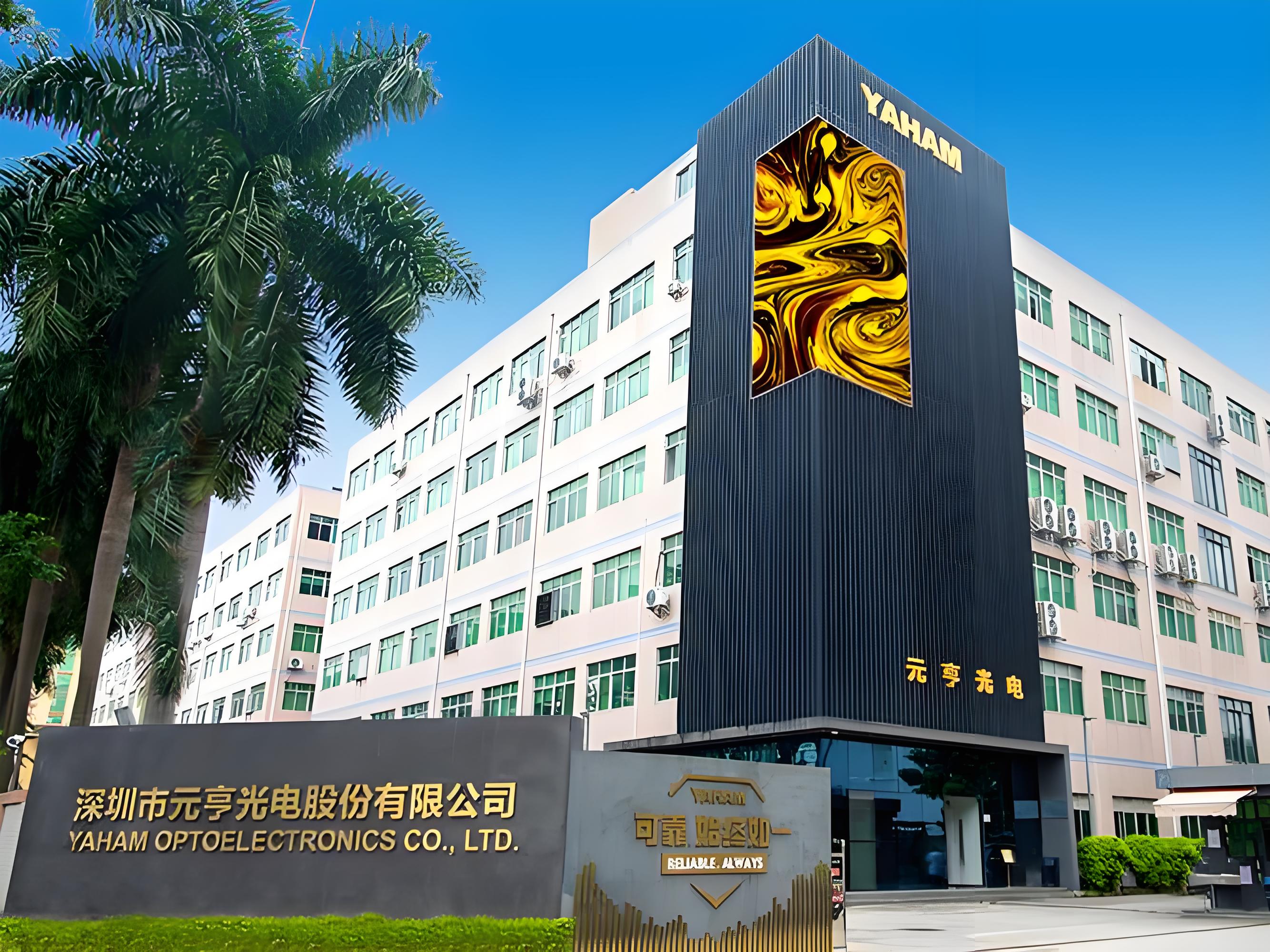
YAHAM Optoelectronics has implemented the SIPM/PLM system to achieve refined R&D management.
More
Project Background
Haipu Zhilian originated in 2000 in the picturesque coastal city of Yantai. Through years of dedicated development, it has established six anti-counterfeit bottle cap manufacturing bases: Haipu Yantai, Haipu Deyang, Haipu Luzhou, Haipu Shaanxi, Haipu Zunyi, and Haipu Huai’an. Guided by its service philosophy—“Crafting Crowns for Prestigious Brands”—Haipu specializes in serving China’s leading enterprises in liquor, edible oil, beverages, and related industries. Its client portfolio includes eight renowned Chinese liquors—Moutai, Luzhou Laojiao, Wuliangye, Yanghe, Jiannanchun, among others—as well as numerous top-tier domestic brands in oils, beverages, and condiments. Haipu also exports to the Americas, Australia, Europe, and other regions, supplying global giants like Diageo.Inheriting a strong innovation DNA, Haipu has consistently maintained a leadership position in anti-counterfeit cap manufacturing through continuous innovation. The company holds over 100 patents, has been recognized as a High-Tech Enterprise, and hosts a provincial-level technology center. Haipu has taken the lead in drafting multiple industry and national standards, including Combined Anti-Counterfeit Bottle Caps, Dimensions of Snap-Fit Finish for Glass Packaging Containers, Aluminum Anti-Theft Bottle Caps, and Digital Information Anti-Counterfeit Hot Stamping Foil.
In November 2020, Haipu was certified under the Integration of Industrialization and Informatization (Two-in-One) Management System, becoming a model enterprise in China’s packaging industry for cross-sector transformation and the shift from traditional to new growth drivers. Looking ahead, Haipu will closely follow trends in IoT and smart manufacturing, offering deep-value services to liquor enterprises—including supply chain data integration and management, smart manufacturing data integration, and big data collection and analytics for the liquor sector. This strategic move aims to unlock a trillion-yuan “blue ocean” market for Industry 4.0 and intelligent IoT upgrades in the liquor industry, deliver big data–driven precision marketing services, and actively participate in building a “trillion-scale Liquor Enthusiast Ecosystem” centered around consumer communities—thereby expanding Haipu’s reach into broader domains.
To enhance R&D management efficiency, Haipu Zhilian launched Phase I of its SIPM/PLM implementation in July 2020, initially deploying modules for structure management, design software integration, and ERP integration. As business needs evolved, the company added project management and process management modules in May 2021. However, with the introduction of Haipu’s “3D Digital Design–Driven Process R&D Model,” the existing PLM system could no longer fully support the company’s strategic ambitions. Consequently, in June 2024, Haipu initiated an advanced PLM process application enhancement project to strengthen management of process data, material consumption, substitute materials, and more—aiming for significant improvements in R&D and process management, thereby elevating the company’s overall scientific research management to a new level.
Project Objectives
• Coding Management: Reorganize and standardize coding for products, materials, and processes across Haipu Zhilian to achieve true “single-code-throughout” (end-to-end code consistency across all business operations). This provides robust BOM data support for production system deployment and lays the foundation for future digital transformation.
• BOM Management: Reduce BOM proliferation, enable multi-factory collaborative design under a unified BOM, enhance BOM reusability, and ensure precise management of standard material consumption and usage.
• Process Foundation Library Management: Standardize and unify the management of standard operations across all six factories, improving efficiency and reducing costs. Implement structured management of operation content to enable structured data flow. Also standardize the management of tooling and equipment, laying a solid foundation for the “3D Digital Design–Driven Process R&D Model.”
• Routing Management: Enable multi-routing capabilities to address the challenge of different factories using the same BOM but requiring distinct process routes. This enhances BOM reuse and boosts design efficiency for R&D engineers.
• Data Integration and Sharing: Achieve deep integration with MES, E-Mold, Kingdee Galaxy (Xinghan), and other systems to ensure accurate and seamless transmission of process routes and process BOMs to MES/ERP, enabling efficient data sharing. This positions SIPM/PLM as Haipu’s definitive platform for design R&D management and product data centralization.
• Document Standardization: Through this project, standardize the management of product-related drawings, inspection standards, product specifications, technical documents, project documentation, and coding rules—establishing a unified document management framework.
• Cross-Departmental Collaboration: Remove system boundaries to transform SIPM/PLM into an enterprise-wide collaborative management platform spanning all departments.
• Paperless Production and Document Management: Introduce a Product Data Services module to support paperless document viewing across departments. Integrate document interfaces with MES to enable fully paperless shop-floor operations.
Based on on-site assessments, blueprint design, Haipu’s actual business needs, and SIPM’s extensive consulting expertise, the SIPM implementation team developed a precise R&D management model tailored for Haipu Zhilian:
_1764049585531.png)
Haipu Zhilian SIPM/PLM Project Management Model
1. Product & Material Management
Before PLM: Material attributes were insufficient for Haipu’s “3D Digital Design–Driven Process R&D Model.” Coding limitations hindered comprehensive material representation and effective management. Material types could not drive standard BOM consumption, making usage control difficult.
After PLM: Material attributes were standardized with hierarchical classification (major, medium, minor, and detailed categories), meeting business needs and enabling integration with Kingdee Galaxy. A standard consumption formula was added to materials, allowing flexible and accurate management of material usage.
2. BOM Management
Before PLM: Each factory maintained independent BOMs for identical products, resulting in duplicate material codes and BOM structures—reducing reuse and causing “one item, multiple codes,” which complicated production and management.
After PLM: BOM substitution management was introduced, enabling cross-factory collaborative production under a single product definition. Standard consumption, standard usage, specified consumption, and standard defect rates were added to BOMs to meet precise material control requirements.
_1764050335142.png)
BOM Substitution Management
_1764050350170.png)
BOM Parameter Management
3. Process Foundation Library Management
Before PLM: Lack of standardized management for standard operations, tooling, and equipment led to inconsistent group-wide process practices and variable product quality.
After PLM: A centralized, system-level process data library was established within PLM. Standard operations were redefined and unified across all six factories. Dynamic attributes for 22 operation types were implemented, with all attributes exportable to operation cards—enabling structured operation data management. Tooling and equipment management was also formalized.
_1764050756217.png)
Standard Operation Library Management
_1764051861772.png)
Dynamic Attribute Management
_1764051993570.png)
Equipment Library Management
4. Routing Management
Before PLM: Factories built process routes only on their own BOM structures. Non-standardized operations prevented route sharing, increasing engineering workload and reducing efficiency.
After PLM: Multi-routing management was implemented. Under a shared BOM, each factory can define its own process route for the same sub-item—enhancing BOM reuse and operational flexibility.
_1764052176851.png)
Routing Management
_1764052540036.png)
Process Document Management
_1764055084132.png)
Equipment Management
5. Interface Management
Before PLM: Integration existed only with EAS (for materials and BOMs); process data remained offline, breaking the final link in digital transformation and increasing error risk.
After PLM: PLM–MES/ERP interfaces were redesigned to fully integrate process routes and process BOMs. Data now flows seamlessly from PLM to downstream systems, realizing efficient data sharing and solidifying SIPM/PLM as Haipu’s core R&D and product data management platform.
_1764056491630.png)
PLM-MES Interface
_1764057055349.png)
PLM-ERP Interface
Summary
Through this PLM deployment, Haipu Zhilian has achieved a breakthrough in the digital transformation of its core product development processes.
The project focused on upgrading four key areas: • Product & Material Master Data Management • BOM Management • Process Foundation Library Management • Routing Management,It also successfully integrated with downstream systems (ERP, MES, E-Mold, etc.), establishing a closed-loop digital management system spanning the entire product lifecycle.
This successful PLM go-live marks a milestone—it signifies Haipu Zhilian’s official entry into the new era of the “3D Digital Design–Driven Process R&D Model.” By building a deeply integrated digital platform that unifies design and process engineering, the company has significantly improved R&D efficiency, shortened response times for process changes, and laid a robust technological foundation for becoming a benchmark digital factory—demonstrating Haipu’s pioneering capabilities in industrial internet innovation.