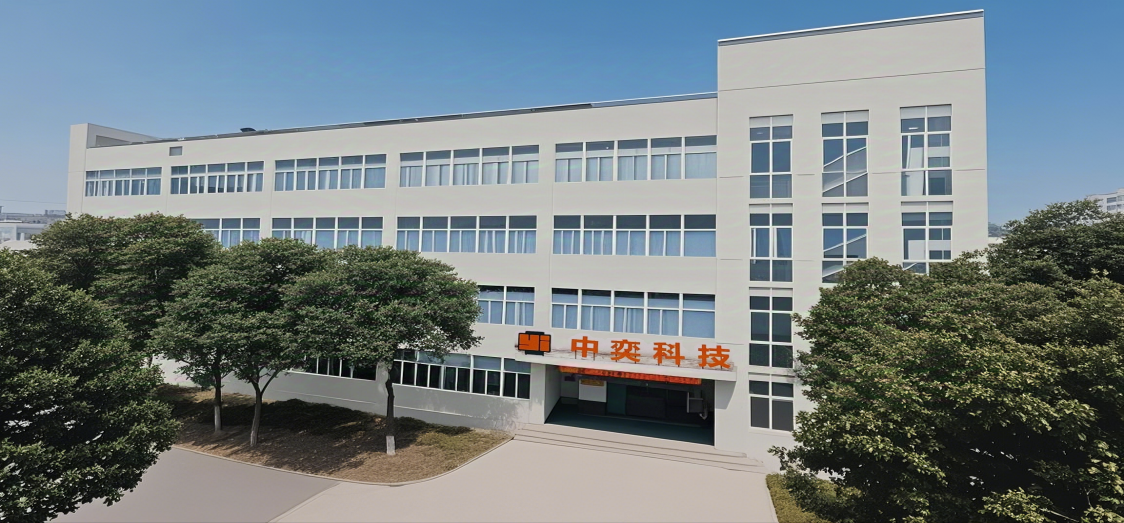
Zhuhai Titan leverages SIPM/PLM to achieve effective management of R&D processes and data.
More
Project Background
Aiswei Technology Co., Ltd. (referred to as Aiswei), is a high-tech new energy enterprise specializing in the research, development, and manufacturing of photovoltaic grid-connected inverters, energy storage inverters, energy storage batteries, smart charging piles, and intelligent energy management systems. Founded in 2009, the company was once affiliated with SMA Group, a globally renowned developer and manufacturer of solar inverters. Headquartered in Shanghai, China, Aiswei has R&D centers in Suzhou, Shanghai, and Xi'an, a production center in Yangzhong, and business branches across Asia, Europe, South America, Africa, and Oceania, selling its products in multiple countries and regions worldwide.
Aiswei is dedicated to providing an uninterrupted supply of clean energy to the world through continuous technological innovation, high-quality products, and services, making green living accessible to everyone.
Leveraging the profound accumulation and successful experiences from developing and manufacturing inverters for the SMA Group, Aiswei has achieved innovative breakthroughs and forged ahead with determination. Its independently developed AISWEI and Solplanet dual-brand series of photovoltaic grid-connected inverters, energy storage inverters, smart charging piles, and intelligent energy management systems are sold in numerous countries and regions around the world. Known for their high quality and reliability following German standards, along with a comprehensive after-sales service system that closely aligns with market needs, Aiswei has earned widespread acclaim globally.
To enhance its level of informatization, the company has been using a Product Data Management (PDM) system since 2012. However, the original PDM system failed to establish associated management from project initiation to project completion and then to product, leading to information silos. Additionally, it did not strictly manage materials, resulting in frequent occurrences of one item having multiple codes. Moreover, there was no knowledge management platform, preventing effective inheritance and urgently necessitating a new Product Lifecycle Management (PLM) system to improve R&D management efficiency, thereby advancing the overall scientific research management level of the company to new heights.
Project Objectives
The overall objective of this project is to optimize and integrate the internal product development and management processes within the enterprise by building a unified digital platform. This will effectively address pain points in R&D process management such as lack of standardization, transparency, and uniformity, while also enhancing traceability and closed-loop management capabilities during the change management process. Additionally, by adjusting the structure of product BOMs, improving the coding structure of product materials, and clarifying the division of labor in R&D processes, further optimization of human efficiency in production-research collaboration segments and automation rates in ODM processes can be achieved. The PLM project is a crucial component in enhancing the company's digital capabilities across product development, manufacturing, and sales, helping to better manage processes, improve workforce efficiency, and optimize user experience. The specific objectives are as follows:
Through the implementation of Aiswei’s SIPM/PLM project, standardize product development processes; standardize the management of input, output, review, and other process documents (all documents should be complete, systematically archived for easy access); ensure that all development processes are recordable, traceable, and enhance project management capabilities, making processes controllable. Implement hierarchical project management with different levels of projects having different hierarchical control processes, providing relative flexibility.
Through the Aiswei SIPM/PLM project, establish standards and norms for structural design and hardware design based on integrated PLM systems, achieving standardization and consistency of original design data. In-development data should comply with new design standards and norms, entering the PLM system through standardized integration methods.
Through the Aiswei SIPM/PLM project, construct an electromechanical integrated product management model centered around BOM, achieving precise technical documentation association management, laying the groundwork for subsequent implementation of process modules and establishing a comprehensive BOM system from E-BOM to M-BOM. Design data should be based on what is in the PLM system, avoiding offline transmission. Standardize coding rules and material descriptions to eliminate multiple materials under one code and control multiple codes for one material. Establish a material design library to increase material reuse and standardization rates.
By implementing this project, achieve control over Aiswei's design changes—managing design changes throughout the product lifecycle from initiation, execution, to termination.
Fully utilize the speed and traceability of the internet to gradually establish electronic notification, approval, and review mechanisms, avoiding errors and omissions of manual operations, paving the way for paperless office environments.
Standardize document criteria—enhance the standardized unified management of drawings, inspection standards, product description documents, technical documents, project documents, and coding rules related to products, establishing document management norms.
Knowledge base sharing—leverage the knowledge management platform of the Aiswei PLM project system to accumulate design experience, gradually establishing a scientific and comprehensive knowledge base.
Through on-site research and blueprint design, combined with Aiswei's actual business needs and SIPM's rich consulting service experience, the SIPM implementation team has crafted a precise product R&D management model for Aiswei.
_1766459916561.png)
Aiswei SIPM/PLM Project Management Model
Project Initiation Application Management
Prior to implementing SIPM/PLM management, the company recognized the importance of project initiation application management but lacked effective tools to operationalize it. Management touchpoints were fragmented and unsystematic. Moreover, initiation applications were not linked to their supporting documents or related projects, resulting in weak associations that hindered process efficiency and smooth workflow.
After implementing SIPM/PLM management, to emphasize the seriousness and formality of project initiation, initiation applications are managed as dedicated objects within the PLM system. The system can receive approved initiation applications from the BPM system via interfaces. Within PLM, these applications are categorized for clearer and more logical management. Furthermore, initiation applications are now systematically associated with relevant documents and projects, significantly enhancing coordination and interconnectivity. This integrated approach has substantially improved both the efficiency and control of initiation application management.
_1766460602360.png)
Project Initiation Application Management
_1766462189861.png)
Project Initiation Document Management
_1766464166225.png)
Project Initiation Application – Project Association Management
Project Management
Before implementing SIPM/PLM management, although the company placed importance on project management, it lacked effective tools for execution and had no systematic support to implement standardized project templates. Project managers lacked clear guidelines for planning projects, making it impossible to ensure standardized R&D project processes. Management touchpoints were fragmented and unsystematic, preventing real-time monitoring. Additionally, without system support for managing project deliverables, review documents could not be effectively linked to their respective projects, hindering timely and effective control over standardized R&D workflows.
After implementing SIPM/PLM management, a unified project management platform was established, with all projects centrally managed within the PLM system. Project planning is now streamlined by replicating standardized project templates, enabling engineers to quickly complete project setup. Completeness of project deliverables is ensured through output completeness checks—such as task-based output constraints, stage-specific data outputs, and overall project data outputs. Furthermore, differentiated change management processes are defined based on project types, enabling tiered control of project changes, with full traceability maintained through change history records.
_1766466106002.png)
Project Management
_1766466865209.png)
Project Template Management
_1766466881551.png)
Project Pre- and Post-Phase Management
_1766466902797.png)
Project Deliverable Management
_1766466933088.png)
Project Statistical Analysis
_1766466951220.png)
Ongoing Project Monitoring
Platform Product Management
Before implementing SIPM/PLM management, the company aspired to adopt platform-based product management but lacked suitable tools to realize this vision. For products within the same series, BOMs had to be maintained individually in Excel and then manually imported into the PDM system—an inefficient process that could not guarantee BOM accuracy. As a result, true product serialization was unattainable, and the company could not provide robust data support for its big data platform.
After implementing SIPM/PLM management, a system-level platform product classification structure was established and embedded into the PLM system, creating a unified management platform. By managing platform product configuration lists, configuration methods, and configuration rules within the system, the company can now generate distinct products—varying in appearance and functionality—simply by selecting different configurations, thereby enabling a true serialized product model. This approach significantly reduces engineers’ workload while ensuring the accuracy of product configuration lists. Furthermore, after completing a product configuration, engineers can re-check out the configuration conditions and align them with any modifications made to the product configuration list, ensuring data consistency and accuracy for seamless integration with the big data platform.
Product Material Management
Before implementing SIPM/PLM management, product development responsibilities were clearly defined, but the outputs generated during the design process were not centrally managed. Products consisted of multiple sub-modules, yet these were not integrated into a unified management framework. Additionally, documentation from the product system development process had not been systematically organized or standardized.
After implementing SIPM/PLM management, a system-level product classification structure has been established and embedded into the PLM system, creating a unified management platform. Products are managed by category, with strict controls enforced on new product creation and standardized attribute entry. Each product is linked to its corresponding project by selecting the associated project number. Centered around the product, an effective document management architecture has been implemented, providing real-time visibility into a completeness checklist of all documents related to the product within the system.
Material Management
Before implementing SIPM/PLM management, material part numbers included version information, causing frequent modifications to the part numbers and resulting in numerous obsolete or invalid codes. Changes occurred often and required Engineering Change Notices (ECNs), consuming significant R&D time. Additionally, the conversion of temporary part numbers into formal ones generated many redundant codes. Material creation and deletion lacked standardized workflows—processes were too informal and uncontrolled, increasing the risk of errors.
After implementing SIPM/PLM management, the company redefined its coding rules, strictly managed versions, and eliminated temporary part numbers—fundamentally reducing unnecessary material requests and changes. Materials are now managed within the PLM system, with controlled workflows ensuring data accuracy. The PLM system’s attribute-based feature management is enabled, allowing the system to automatically generate standardized material descriptions, thereby promoting data consistency and minimizing the occurrence of multiple codes for the same item. Furthermore, substitute and successor material functionality has been activated in PLM, significantly reducing the number of ECNs and improving operational efficiency. Software components have also been incorporated into PLM for centralized control, enabling convenient access and manageable change processes.
_1766467296661.png)
Material Attribute and Characteristic Management
_1766469312964.png)
Material Usage Statistics Management
BOM Management
Before implementing SIPM/PLM management, engineers had to manually edit BOMs in Excel spreadsheets and circulate them for review—an inefficient process prone to errors. From R&D to production, a single BOM often combined structural, hardware, software, and process information, resulting in an overly complex and difficult-to-manage BOM structure. Any material revision or temporary part number change required a BOM update, leading to frequent changes that consumed substantial R&D time. After R&D teams created the BOM, it had to be manually entered into the ERP system by the Document Control Center (DCC), further reducing efficiency.
After implementing SIPM/PLM management, the PLM system now provides multiple flexible methods for BOM creation and supports online review workflows, ensuring BOM accuracy while significantly improving efficiency. The original monolithic design BOM has been transformed into a modular BOM management approach. Engineers can now directly build BOMs within the PLM system or upload them via system interfaces. Through the conversion from Engineering BOM (E-BOM) to Manufacturing BOM (M-BOM), the production BOM is automatically generated, clarifying BOM ownership and streamlining the handover process. This shortens the BOM entry chain and enhances overall BOM management efficiency.To better manage electronic BOMs (eBOMs), a dedicated electronic component module has been established within the PLM system. Uploaded eBOMs can be automatically matched with corresponding materials, ensuring efficient and accurate utilization of electronic BOM data.
_1766469406196.png)
Electronic BOM (eBOM) Management
Alternate Material Management
Before implementing SIPM/PLM management, Aiswei did not clearly distinguish between alternate materials and successor materials. Any material substitution required initiating an Engineering Change Notice (ECN) through the OA system, which involved reviews from multiple departments and manual data entry into the ERP system by the Document Control Center (DCC). This resulted in a lengthy change process, frequent changes, and low efficiency. Furthermore, the management of alternate and successor materials was fragmented and decentralized, making effective data governance difficult.
After implementing SIPM/PLM management, Aiswei now uses a dedicated module within the PLM system to centrally manage alternate and successor materials, with clear categorization and streamlined administration. By leveraging predefined material substitutions, the frequency of ECN submissions has been significantly reduced, improving overall work efficiency. Additionally, alternate and successor material relationships are automatically transmitted to downstream systems along with the BOM, eliminating errors caused by manual data entry.
_1766469474691.png)
Alternate Material Usage Management
Process Management
Before implementing SIPM/PLM management, Aiswei did not have the concept of a standardized process configuration library. All process-related information was manually edited in Excel spreadsheets and then manually entered into the ERP system by the Document Control Center (DCC), resulting in low efficiency and a high risk of errors. Moreover, engineers could freely modify process data, leading to inconsistent and non-standardized management practices.
After implementing the SIPM/PLM system, Aiswei established a system-level process configuration library tailored to its business needs and embedded it into the PLM system, creating a unified management platform. Now, when building the Manufacturing BOM (M-BOM), authorized personnel can import relevant process information from the configuration library with a single click, significantly improving the efficiency and standardization of process management.
_1766471006780.png)
Process Configuration Library Management
_1766472107769.png)
Process Step Assignment Management
3D Design Software Interface Integration Management
Before implementing SIPM/PLM management, engineers at Aiswei first designed drawings using 3D design software and then manually transferred these drawings into the PDM system, where they could not be directly associated with the corresponding parts for management purposes. This created a disconnect in management practices and resulted in duplicated efforts.
After implementing the SIPM/PLM system, 3D design software is used as the primary source for drawing files, standardizing the design source. Through an integrated interface, drawing information can be quickly extracted and converted into PDF files, reducing the likelihood of errors. The interface also integrates components and drawings into a cohesive whole, so that any changes to the drawings automatically trigger updates to the associated components, thereby avoiding redundant work and improving efficiency.
_1766472383781.png)
Extract CAD drawing information via interface
_1766473584729.png)
Upload drawings and materials to PLM via interface
Historical Drawing Management
Before implementing SIPM/PLM management, historical drawing files resulting from design changes were stored in the PDM system, often leaving multiple versions of the same document. This made it difficult to ensure that users always accessed the latest and valid version.
After implementing the SIPM/PLM system, all changes to historical drawing files are centrally managed within the system. Electronic drawings in the PLM system are always up-to-date and reflect the current valid version. If a historical drawing is needed, users can simply download it directly from the system for immediate use or for modification—making the process convenient and efficient. To ensure data consistency, other related documents can also be uploaded under the corresponding historical product category.
Document and Drawing Management
Before implementing SIPM/PLM management, Aiswei managed electronic files on shared network drives, while paper-based documents underwent offline signing and approval processes. Engineers then individually uploaded approved documents to the shared drive—a highly inefficient approach that made it difficult for engineers to access and use documents effectively. After drawing revisions, files stored locally on individual engineers’ computers often became inconsistent with the latest official electronic versions, and tracing historical versions of updated documents was extremely challenging.
After implementing the SIPM/PLM system, all documents have been systematically classified and centrally managed within the PLM platform. This enables efficient document search, usage, and granular permission control. Going forward, all document releases are governed by the PLM system, ensuring that users always access the latest approved version—achieving consistency between digital and physical documents and providing clear visibility into historical versions. Moreover, within the PLM system, documents can be directly linked to projects, products, parts, and other relevant data objects, enabling bidirectional traceability. This greatly facilitates engineers’ tasks such as document reference, reuse, and reporting.
PDF Document Management
Before implementing SIPM/PLM management, Aiswei required physical signatures on printed paper documents, which reduced efficiency. Sharing source files directly or manually converting them to PDF compromised document security and added unnecessary workload, making paperless document management unattainable.
After implementing the SIPM/PLM system, documents are electronically signed according to predefined review and approval workflows, eliminating the need for manual signatures. The system automatically converts approved documents into PDF format. Both the PDF and its source file are protected by permission controls that govern viewing, downloading, and editing—ensuring document security and integrity. This lays a solid foundation for the future implementation of a fully paperless management environment.
_1766474535794.png)
Technical Document Signing
Change Management
Before implementing SIPM/PLM management, Aiswei handled change requests through its OA system. This process operated in isolation and could not be linked to relevant documents, resulting in information silos. Additionally, change requests could not be systematically or promptly tracked, making it difficult to monitor progress and control timelines.
After implementing the SIPM/PLM system, a dedicated change management module was established within PLM and integrated with document management, creating a unified information platform. By leveraging change project management capabilities, changes are now managed in a structured and orderly manner, significantly improving traceability and overall change control efficiency.
_1766474783508.png)
BOM Change Management
Standardization Management
Before implementing SIPM/PLM management, Aiswei lacked a systematic knowledge management system, making information retrieval difficult and knowledge sharing inefficient. Document templates were not centrally managed, and engineers could freely modify them, leading to inconsistencies.
After implementing the SIPM/PLM system, a centralized knowledge base and standard document library have been established. Knowledge is organized into structured categories based on type, facilitating easy access, sharing, and long-term knowledge retention. Design document templates have been standardized and incorporated into the PLM system for centralized control—ensuring that all engineers use consistent, approved templates and promoting document standardization and compliance. The system also supports fast search and retrieval via attributes such as abstracts, keywords, and file names, greatly enhancing the efficiency of knowledge discovery and reuse. Furthermore, by managing document templates within PLM, the foundation has been laid for standardized management of product drawings, product specification documents, technical documentation, and project files.
_1766474983619.png)
Knowledge Base Management
_1766475175981.png)
Document Templates
Process Management
Before implementing SIPM/PLM management, Aiswei’s workflows were hard-coded into standalone programs, making them inflexible and difficult to promote or adapt across the organization. After document review and approval, physical copies had to be distributed manually to other departments—an inefficient and labor-intensive process.
After implementing the SIPM/PLM system, workflows are now standardized and embedded within the PLM platform, tightly integrated with corresponding review data. Engineers only need to ensure the accuracy of the documents they maintain; the system automatically enforces correct workflow execution. During process execution, real-time tracking and monitoring are supported, and detailed workflow records provide valuable data for continuous management improvement. Additionally, the system lays the groundwork for future paperless operations by enabling the distribution of digitally signed PDF documents through automated workflows.
_1766475459812.png)
Review and Approval Workflow
_1766475550114.png)
Workflow Monitoring
ERP Material Master Data Interface Management
Before implementing SIPM/PLM management, Aiswei’s BOM structure in the ERP system was developed through a fragmented process: multiple departments manually edited and refined BOM data in separate Excel files, which were then handed over to the Document Control Center (DCC) for manual entry into ERP. This resulted in a lengthy business chain, low efficiency, and a high risk of human error. Moreover, when the DCC directly modified BOMs in ERP, changes were not logged, making it difficult to trace revision history.
After implementing the SIPM/PLM system, the data flow from PLM to ERP has been fully integrated, unifying material and BOM management. Design engineers are now actively involved throughout the entire process. Upon completion of design tasks, a PBOM (Production BOM) package can be generated with a single click, ensuring high efficiency and data quality for downstream systems. Data transmission attributes are configurable via the front-end interface, offering flexibility and ease of use. Every data transfer between PLM and ERP is automatically recorded in the PLM system, enabling full traceability. Additionally, PLM’s built-in inventory inquiry function allows engineers to quickly check material stock levels without switching between systems—significantly boosting work efficiency.
_1766477208766.png)
ERP Receiving Interface
Summary:
Through the implementation of this PLM project, Aiswei has comprehensively restructured its core business processes, including project management, product and material master data management, change management, and workflow management.
By strategically deploying the PLM system, Aiswei has achieved an intelligent upgrade and end-to-end transformation of its R&D management system. The implementation has delivered breakthrough progress in four key areas:
End-to-End Digital Project Lifecycle Management:Built on the PLM platform, Aiswei has established a fully digitalized system spanning from project initiation and execution to product management. The unified R&D management platform has significantly improved R&D efficiency. Management can now monitor project progress in real time through multidimensional data dashboards.
Platform-Based Product Management Innovation:Aiswei has adopted an innovative platform-based product management model powered by a parametric configuration engine, enabling rapid generation of product variants. This module not only shortens new product development cycles but also seamlessly integrates with the company’s big data platform, establishing a digital linkage between intelligent product configuration and market demand forecasting.
Seamless PLM–ERP Integration:By integrating the PLM and ERP systems, Aiswei has achieved seamless data flow for materials, BOMs, and process information—reducing risks across R&D and production while enhancing management efficiency. Design engineers are now engaged throughout the entire process; upon completion of design tasks, all associated material, BOM, and process data are automatically transmitted to the ERP system, ensuring high-efficiency, high-quality downstream operations.
Paperless Foundation and Structured Knowledge Management:Leveraging the PDF Factory’s electronic signature capability, Aiswei has laid a solid foundation for future paperless engineering. Additionally, the enhanced knowledge management module has enabled the creation of a structured knowledge graph, significantly improving the reuse of engineering expertise and providing strong support for organizational knowledge accumulation and transfer.
The successful go-live of the PLM system marks a milestone in Aiswei’s R&D digital transformation journey. It not only enables cross-departmental and cross-system collaborative innovation but also delivers robust data support to the enterprise’s big data platform.
Collectively, these initiatives have elevated Aiswei’s scientific research and management capabilities to a new level, injecting fresh momentum into the company’s sustainable growth and competitiveness.