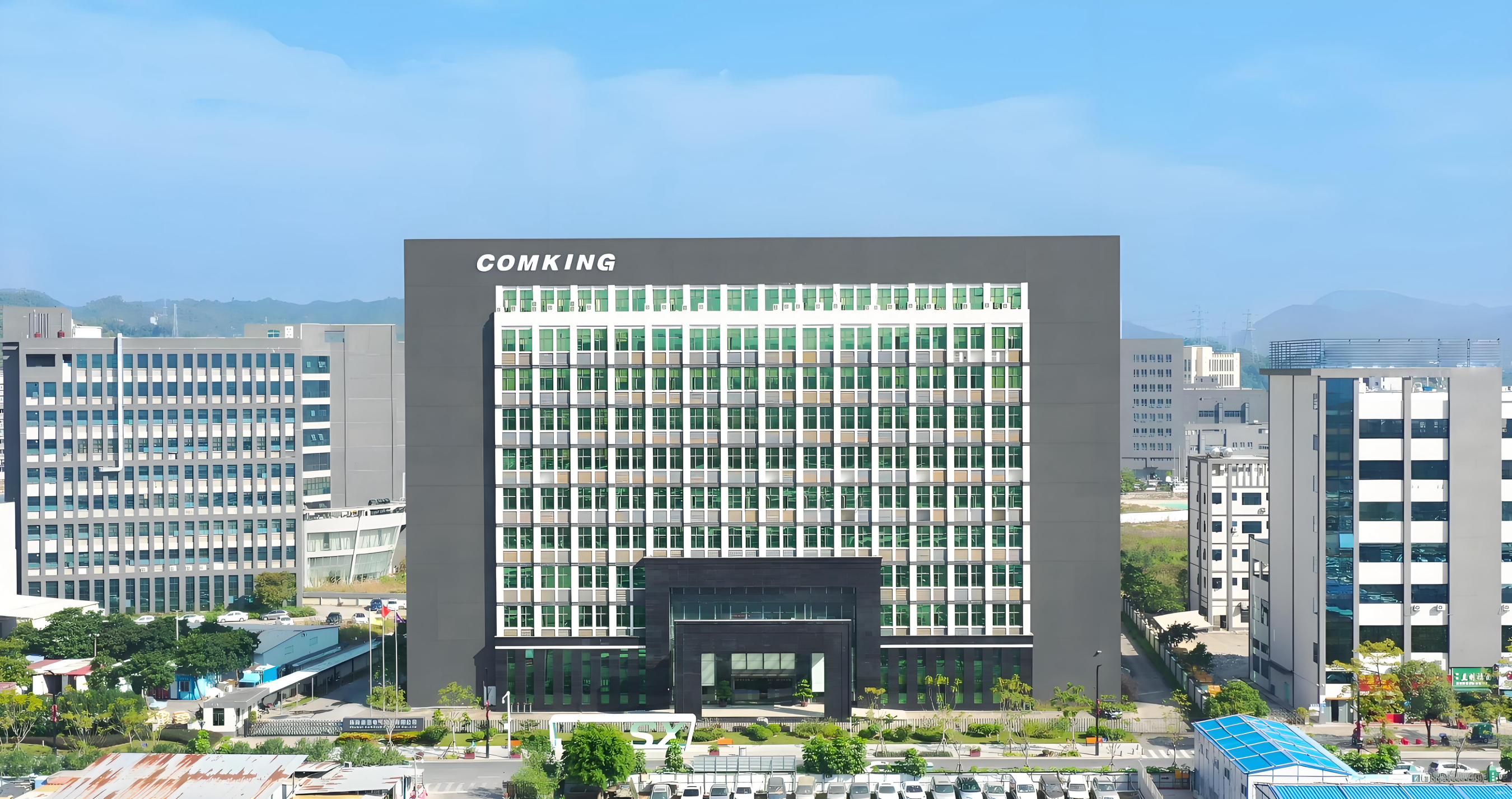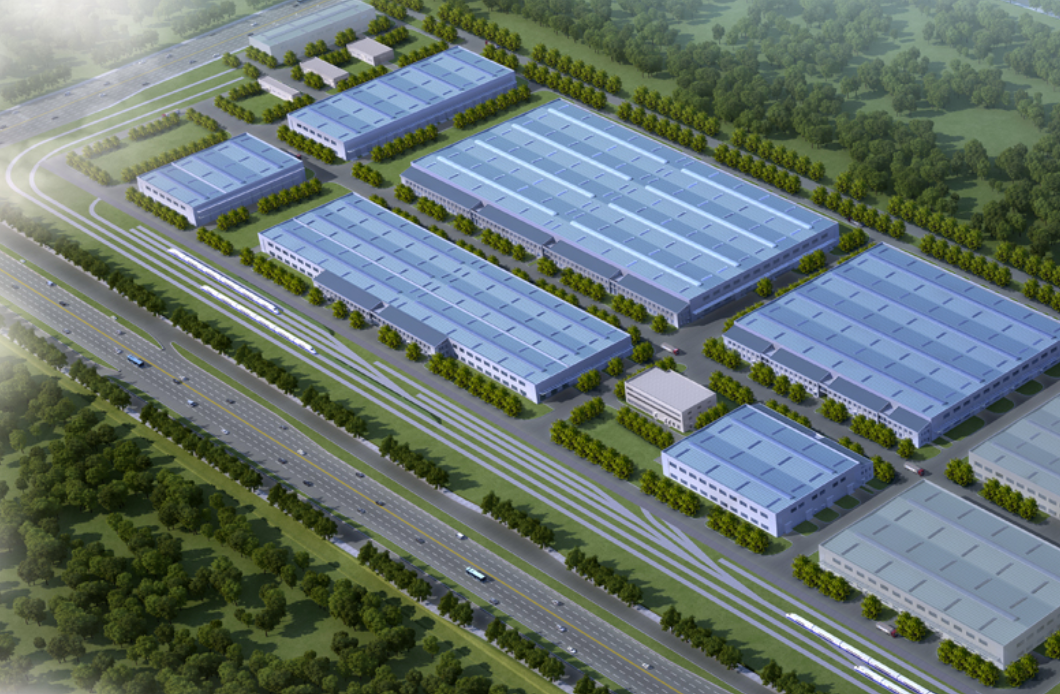
Rongqing Energy has built an enterprise R&D management platform using SIPM/PLM.
More
Project Background
Titan, officially known as China Titan Energy Technology Group Limited, was founded in 1992 and is listed on the Main Board of the Hong Kong Stock Exchange (HKEX stock code: 02188). Its subsidiaries include Hebei Titan New Energy Development Group Co., Ltd., Zhuhai Titan Power Electronics Group Co., Ltd., Zhuhai Titan Technology Co., Ltd., Zhuhai Yilian New Energy Vehicle Co., Ltd., and Zhuhai Titan Energy Storage Technology Co., Ltd., among others.
_1768532229758.png)
The company specializes in the field of power electronics, integrating R&D, manufacturing, and marketing into a unified operation. Focused on diverse users across power generation, transmission, and consumption, it leverages advanced power electronics and automatic control technologies to address needs related to power conversion, monitoring, control, optimization, energy efficiency, and renewable energy utilization. The company drives its growth through technological innovation and the promotion of new technologies and products. It boasts a professional, high-caliber workforce, strong R&D capabilities, and a nationwide marketing and technical service network.
Its main product families include:Power DC product seriesElectric vehicle (EV) charging product seriesEV operation servicesPower grid monitoring and power quality management product seriesEnergy storage product series
Through years of development, the company has not only achieved strong business performance but also earned numerous honors, including:National High-Tech Enterprise、Guangdong Province “Contract-Honoring and Creditworthy Enterprise”、China Well-Known Trademark and Guangdong Province Famous Trademark (“Titan”)、Guangdong Provincial Famous Brand Product、Guangdong “Guangcai Star” Enterprise、Top 10 Private Enterprises in Zhuhai、Its technologies and products have also received significant recognition:One product series was included in the National Torch Program,Three products were designated as National Key New Products,A number of products were recognized as Guangdong Provincial Key New Products,Three technologies were incorporated into China’s National “863” High-Tech R&D Program,The company holds a substantial portfolio of patents and proprietary technologies. Its robust R&D capabilities and intellectual property advantages form the core of its competitiveness.
Over many years of market promotion, Titan products have gained widespread adoption among a large customer base, including globally renowned projects such as:The Three Gorges Power Transmission & Transformation Project、China’s first 750kV Lanzhou East Substation、Gezhouba Hydropower Plant、The South-to-North Water Diversion Project、Qinghai-Tibet Railway、Tianjin Metro、Zhuzhou–Liupanshui Railway and its double-tracking project、Beijing Capital International Airport、Beijing Olympics、Shanghai World Expo、Guangzhou Asian Games,More than 10,000 substations of various voltage levels across China are currently operating Titan products, and the company has also entered international markets, including the United States. Building on the success of its existing products, Titan has established a strong market reputation and platform, laying a solid foundation for launching new products.
Today, Titan not only provides high-quality, reliable, and diverse products—including charging, discharging, and energy storage systems; power quality monitoring and optimization solutions; and battery manufacturing and maintenance technologies—but also offers comprehensive integrated solutions in power electronics to meet diverse demands for high-quality, efficient, and versatile power applications. In the context of low-carbon economic development, energy conservation, emission reduction, renewable energy integration, and smart grid construction, these offerings enjoy vast market potential.
“Making electrical energy more valuable.”We continuously strive to:Expand the applications of electrical energy、Enhance the performance of electrical energy usage、Broaden the sources of electrical energy、Improve the quality of electrical energy。
_1768532398201.png)
High-Frequency Switching DC Power Supply System
Project Objectives
Through the implementation of the SIPM/PLM project, the following objectives will be achieved:
Establish standardized R&D project processes to enable rapid project planning across different project types and product lines.
Template development approach: Initially create baseline templates for immediate use; subsequently refine and optimize them based on lessons learned and practical experience during project execution.
_1768533077755.png)
(R&D Standard Process Template)
Enable monitoring of project progress, provide early warnings for schedule deviations, and effectively control the timeliness of execution and the accuracy of deliverables; enhance transparency in project planning and data.
_1768535034769.png)
(In-Progress Project Monitoring Dashboard)
_1768541871382.png)
In-Progress Project Task Monitoring Dashboard
_1768544210575.png)
(In-Progress Project Team Member Task Monitoring Dashboard)
_1768545372232.png)
(Real-Time View of Project Output Data)
For short-cycle projects that still require a certain level of management process and deliverables, PLM provides standalone task assignment and task output delivery outside of formal project management.
_1768546169574.png)
Establish a data management platform for R&D products to enable modular management of product development.
Build product-level document management and product BOM (Bill of Materials) management centered on the product as the primary source.Use the BOM as the core link to establish a systematic engineering document and drawing management model, enabling organized product data management and significantly enhancing engineers’ ability to share product data.
_1768546746528.png)
(Product Classification Management)
_1768547214945.png)
(Product Management Model)
_1768548186150.png)
(Product Modularization Example)
Use 3D structural design as the basis for "bare product" design, and automatically generate the bare product BOM through 3D interface-driven processes.
_1768549914362.png)
(2D Design-Driven BOM Generation)
Parts (materials) are classified by material category, based on design type, major material categories, and minor material subcategories for organized management.
_1768550660351.png)
Through this implementation, Titan has addressed the previous lack of a formal design data approval mechanism by establishing and institutionalizing a standardized review and approval process for R&D product data, thereby achieving standardized management and enhanced reliability control of product data.
By leveraging the graphical workflow functionality of the SIPM/PLM system, Titan has embedded its R&D design data review process directly into the system. This implementation enforces standardized requirements for design documentation and enables reviewers to open and examine documents and drawings directly within the graphical workflow. The system also provides clear, real-time visibility into the status and progress of the approval process. As a result, engineering drawings and technical documents are consistently controlled according to standardization requirements, ensuring the quality and reliability of Titan’s products.
_1768550955466.png)
(Standardized R&D Data Review Process)
_1768551608988.png)
(Leadership View of Workflow Instances)
Establish a standardized coding system for R&D management to provide accurate data sources for future ERP production systems.
By leveraging the coding management module of the SIPM/PLM system, Titan has institutionalized coding rules for products, materials, and technical documents, enabling engineers to easily invoke standardized codes. This significantly improves coding efficiency, enhances the standardization and consistency of enterprise-wide coding practices, and ensures alignment between PLM and ERP part numbering systems.
_1768551771927.png)
(Material Coder)
PLM and ERP System Integrated Application
Achieve the transfer of design data from PLM—including product BOMs and material information—to the ERP system via an interface. Both parties agree on the transfer scheme, develop and test accordingly, and ultimately complete the transmission of PLM data to ERP. The transfer of interface data is implemented through intermediate tables. The schematic diagram illustrating the data transfer process is shown below:
_1768552699266.png)
(Interface Transfer Schematic)
_1768553310834.png)
Release PBOM from the PLM side
_1768553667703.png)
Visualized PBOM Release Results
Summary:
Through this PLM implementation, Titan has successfully institutionalized its standardized R&D design processes. From project planning and task execution to task reminders, project status monitoring, and task tracking, the entire product development process is now effectively controlled. Stage-gate reviews ensure that tasks are completed with both quality and timeliness.Real-time monitoring of the development process, transparent visibility into deliverables, and comprehensive control over project handover completeness have all been effectively achieved.
By integrating SIPM/PLM through customized interface design, consistency between drawings and BOMs is ensured. A formalized business approval workflow for R&D design data has been established and solidified.
SIPM/PLM’s product management capabilities enable integrated management of components, drawings, and technical documents. Through robust process and change management, product data traceability has been realized. Furthermore, seamless integration between PLM and ERP systems has been achieved, enabling a cohesive link from design to production.