Blue Sky Intelligent Equipment has established an R&D product management information platform through SIPM/PLM.
More
Project Background
Wanxin Precision Machinery was founded in Dongguan, Guangdong Province in 2009 and relocated its headquarters to Changsha, Hunan Province in 2014. The company currently operates the Hunan Provincial Enterprise Technology Center and the Changsha Technology Innovation Center, and has established three major R&D centers—in Japan, Shenzhen, and its Hunan headquarters—driving high-quality industry development through innovation.
Guided by the corporate vision of “dedicating ourselves to building a world-class intelligent electromechanical brand,” Wanxin Precision Machinery is committed to pursuing an enterprise-strengthening and nation-building path characterized by precision and excellence. With the strategic goals of specialization, branding, and internationalization, the company aims to enhance its design and R&D capabilities. To achieve lean manufacturing through systematic, standardized, and modular design methodologies, Wanxin has decided to implement a Product Lifecycle Management (PLM) system as the foundation of its design and R&D platform. SIPM, with its leading Model-Driven Architecture (MDA) technology and business-centric software design philosophy, aligns precisely with Wanxin’s technical management objectives and has thus become the company’s strategic partner for information technology infrastructure development.
Project Objectives
Through the implementation of the SIPM/PLM project, the following objectives will be achieved:
Standardize product development processes by implementing PLM, including standardized management of process documents related to inputs, outputs, reviews, etc., ensuring that R&D activities are fully documented, traceable, and enhancing overall project management capabilities.
Institutionalize the company’s R&D processes to advance standardization in product development.
Achieve standardized and structured associative management of all product-related data, including materials, Bills of Materials (BOMs), drawings, and other technical documentation.
Establish BOM-centric control over all product data, enabling effective data governance and seamless integration between PLM and ERP systems.
Implement categorized management of engineering documents, standardized template management, and efficient handling of change history.
Promote standardization of process design through digital management of manufacturing processes.
Provide an integrated and collaborative R&D management platform to accelerate knowledge transfer, enable real-time sharing across the organization, and reduce the cost associated with knowledge dissemination.
_1768808019554.png)
PLM System Business Panorama
Requirements Management
The structured requirements management module enhances the accuracy of requirement communication and development efficiency by systematically organizing and tracing requirements throughout the entire product development lifecycle. It reduces the risks associated with requirement changes and strengthens alignment between products and market needs, thereby improving the company’s competitiveness.
_1768810234082.png)
Requirements Management
Project Management Functionality Enables Controllable R&D Processes
Based on the company’s current business operations, an overall plan for project management has been developed to establish a framework tailored to the product development process. This project management workflow has been standardized and embedded into the SIPM/PLM software system.
_1768811920679.png)
Project Process Management
Product Design Management
Through deep integration of 2D and 3D design software with the PLM system, product design drawings and engineering BOMs are seamlessly transferred into PLM, minimizing errors caused by manual data entry.
_1768812464975.png)
Integration of 2D Design Software with the PLM System
_1768813567256.png)
Integration of 3D Design Software with the PLM System
Component Management
Standardized definition of component attributes, standardized attribute maintenance procedures, and multi-dimensional validation of component uniqueness ensure a "one-item-one-code" principle. Part numbers are automatically generated by invoking predefined coding rules, significantly reducing manual coding effort while improving accuracy and efficiency. The system automatically categorizes components by material type, facilitating organized searching and statistical analysis.
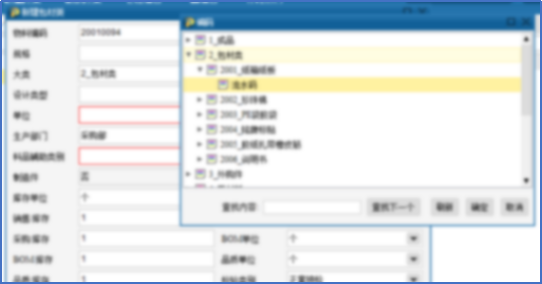
Standardized and normalized component attribute definitions
_1768814348238.png)
Standardized and automated material classification
Process Foundation Data Management
Through a standardized process foundation data management module, various types of process-related base data are standardized and structured, enabling efficient retrieval and reuse during product process planning for rapid工艺 design.
_1768814556822.png)
Standardized management of the process foundation data library
Product Process Management
Structured process data is associatively managed with components, facilitating seamless flow of product process data across systems. It also serves as the authoritative source of product process data for ERP and MES systems.
_1768815002611.png)
Process Route Management
Alternate Parts Management
The alternate parts management functionality enhances supply chain flexibility and responsiveness by standardizing the selection, qualification, and change processes for alternate components. It helps reduce inventory costs and the risk of production stoppages, ensures manufacturing continuity, and strengthens the company’s ability to respond to market changes.
_1768815418835.png)
Alternate Parts Management
Change Management
Streamline the change process and embed it into the PLM system to ensure standardization and consistency.
Initiate change requests by uploading change orders; the system then drives the entire change process through predefined workflows. This ensures transparency, facilitates real-time tracking of changes, and guarantees full traceability of change history.
_1768815996077.png)
Standardization of the Change Request Process
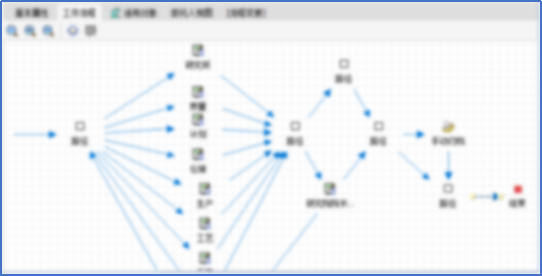
Standardization of the Change Review Process
_1768816874124.png)
Engineering Document Change History Management
_1768817166815.png)
BOM Change History Management
Part Numbering Management
Through the PLM system’s part numbering management module, the company’s coding rules are standardized and embedded into PLM. Part numbers are generated by invoking these predefined coding rules, ensuring uniqueness and consistency across the organization.
_1768817474280.png)
Standardization of Coding Rules
PLM and ERP Integration
Through PBOM (Production Bill of Materials) release management, material data, BOMs, alternate parts information, and process data from the PLM system are published to an intermediate database. From this intermediate database, material records, BOMs, alternate parts, and routing information are then transferred to the ERP system, enabling seamless integration of product data from PLM to ERP.
_1768817778214.png)
PBOM Release
_1768818282295.png)
PBOM Data Upload to ERP
Summary:
The implementation of the PLM system has provided Wanxin Precision Machinery with a standardized and structured platform for project management and product data management.
The PLM implementation has driven standardization of product data management.
By organizing projects around tasks and managing schedules within PLM, the company has effectively implemented its R&D management system, enabling end-to-end control over the entire product development lifecycle.
PLM’s change management functionality has standardized and systematized the change process, ensuring controllable change milestones and full traceability of change history.
Integration of design and manufacturing processes has been achieved: collaboration between design and process engineering has been strengthened, design tools have been seamlesslyintegrated, and consistency and compliance in R&D design have been significantly improved.
High-level integration between PLM and ERP ensures efficient and accurate flow of product data from design through to production.
Building on these achievements, the company has ultimately established standardized R&D processes. By institutionalizing standards and best practices, Wanxin has enhanced both quality and efficiency, transitioning from a reliance on individual expertise to a system- and data-driven operational model.