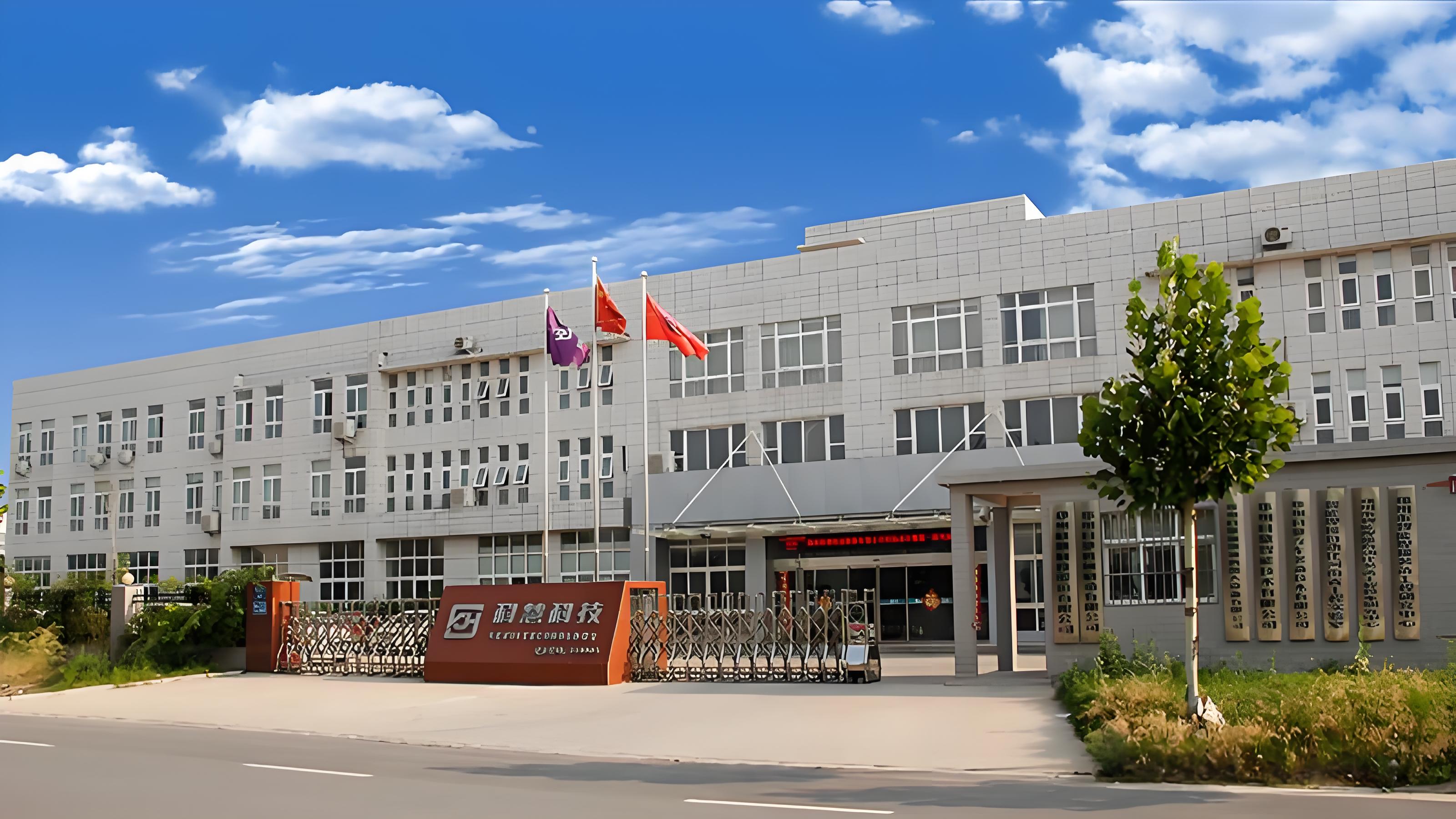
KeHui Technology Co., Ltd. enhances its R&D management capabilities through the implementation of SIPM/PLM.
More
Company Profile
Suzhou Zhongjie Automotive Components Co., Ltd. was established on February 10, 2010. Its registered address is located in the Liantang Industrial Concentration Zone (Wengjiacun), Shanghu Town, Changshu City. The company's business scope includes the manufacturing, processing, and sales of metal components and automotive air conditioning mechanical parts (projects requiring environmental impact assessment can only be carried out with approval from environmental protection authorities). It also engages in the import and export of goods and technology, except for those commodities and technologies that are subject to national restrictions or prohibitions.
Focusing on serving clients in the automotive heat exchange system and powertrain industry, Suzhou Zhongjie exports worldwide to countries including the United States, Mexico, Brazil, Germany, France, Spain, Czech Republic, Poland, Hungary, Thailand, India, Japan, and other Asian, American, and European nations.
In 2011, the company obtained TS16949 quality system certification.
In 2013, it received certification as a high-tech enterprise in Jiangsu Province.
In 2017, the company established a wholly-owned subsidiary in Mexico and simultaneously initiated its listing process domestically.
In 2018, it was recognized as a model smart workshop in Suzhou and completed ISO140001 system certification.
By 2019, it had been awarded the title of model smart workshop in Jiangsu Province.
Suzhou Zhongjie Automotive Components Co., Ltd. specializes in the research, development, production, and sales of automotive heat management system components. As a high-tech enterprise focusing on this field, it mainly targets automotive energy conservation, environmental protection, new energy directions, offering products such as automotive air conditioning systems, various types of automotive heat exchangers, piping systems, new energy vehicle thermal management systems, automotive powertrain systems, and precision machined components for automotive vision systems.
The company ships over 100 million precision machined products annually, supplying virtually all mid-to-high-end automobile manufacturers. Its business covers America, Europe, and Asia evenly. In August 2021, it was honored as a demonstration enterprise for industrial internet development in Jiangsu, particularly for the "5G + Industrial Internet" pilot project. In December of the same year, it received recognition as a provincial-level intelligent manufacturing factory.
In 2022, the company continued to advance its digital factory strategy by piloting the construction of a 5G+smart factory. Leveraging 5G + industrial internet for network support, it aims to achieve full connectivity of core equipment data, building an intelligent factory capable of remote control and smart management.
Project Objectives
Through the implementation of the SIPM/PLM project, the following objectives have been achieved:
Establish a clear and comprehensive product family structure, with parts, BOMs, and drawings automatically extracted directly from design software via integrated interfaces—ensuring all data shares a single source of truth and remains synchronized throughout its lifecycle.
Build a process data management platform to manage process resource libraries, routing, and process documents. This integrates product design and process design, establishes an enterprise-level process knowledge base, and enhances process standardization.
Implement a complete project management system to support end-to-end project planning, execution, tracking, and monitoring within the PLM platform.
Standardize and unify corporate document templates and business processes, formalize and institutionalize change management procedures, and enable online electronic signatures for technical documents and drawings—significantly improving review and approval efficiency.
Break down information silos and streamline enterprise data flows by enabling seamless data exchange with ERP and MES systems (including materials, BOMs, and process routes).
Through on-site assessments and detailed blueprint design—combining Suzhou Zhongjie’s actual business needs with SIPM’s extensive consulting expertise—the SIPM implementation team has delivered a precise and tailored R&D management solution for the customer.
_1772607530465.png)
Overall Implementation Scope of Suzhou Zhongjie
Project Management
Based on the customer's R&D process system requirements, project templates have been reviewed, standardized, and institutionalized.
Through this template refinement, deliverables and responsible parties for each project activity have been clearly defined.
Project execution is driven forward by monitoring project status and issuing early warnings for project tasks, ensuring effective implementation and timely delivery.
_1772608131221.png)
_1772608373677.png)
_1772608775983.png)
_1772609255693.png)
Product Management
Product classification and centralized management have been implemented, providing the R&D department with a unified product data management platform.
Configuration lists are created based on system products, clearly linking mechanical and hardware components within each product to form an integrated, interconnected product information structure, thereby improving search efficiency.
Structural design is coordinated through the product BOM as the central link, enabling effective control over all design data.
Through integration between design software and the PLM system via interface programs, product design BOMs are automatically generated. This enables online drawing management and ensures the uniqueness of drawing versions. Furthermore, the interface integrates parts, BOMs, and associated drawings into a cohesive unit, so that any drawing revision automatically triggers corresponding updates to the related BOM and components.
_1772609522869.png)
_1772610007044.png)
_1772610186680.png)
_1772610511466.png)
Process Management
Process routes are designed and managed through the PLM system. Standard operation libraries and foundational process databases have been established within the system, and process documents have been uploaded accordingly.
_1772611325645.png)
_1772611908282.png)
_1772612354370.png)
_1772612615750.png)
_1772612789738.png)
_1772613001201.png)
FMEA
Change Management
By streamlining and standardizing workflows, the company has institutionalized its engineering change process to ensure that technical changes are controlled and executed in a standardized manner. All changes are centrally managed within the system, where electronic documents are always up-to-date and valid, and all change-related records—including process documents and approval nodes—are fully traceable.
An engineering change management model has been established, with the Engineering Change Request (ECR) serving as the foundation for managing the entire change process. The change workflow is task-driven to ensure controllability throughout. Change execution is initiated and guided by official Change Notices, and the change request is formally closed upon completion, creating a closed-loop process.
Coding Management
Unified coding for materials and technical documents has been implemented, establishing a standardized coding system to prevent the occurrence of multiple codes for the same item.
Through the implementation of SIPM/PLM, an enterprise-specific coding system for materials and technical documents has been institutionalized, ensuring "one item, one code." This eliminates issues such as multiple codes for a single item, multiple items sharing the same code, and non-standardized coding practices.
_1772613637266.png)
Process Management
In accordance with R&D system management requirements, business processes have been streamlined and standardized. The PLM system is used to manage data through workflow approvals and lifecycle control.
_1772614259790.png)
Electronic Signatures
Standardized and unified corporate document templates have been implemented, and electronic signatures are now applied to critical technical documents, significantly improving process efficiency.
_1772614553161.png)
Summary:
The successful implementation of this PLM project has provided Suzhou Zhongjie’s R&D and process engineering departments with an efficient product data management platform.
By leveraging design-model-driven methodologies to generate structured modular BOMs, and through seamless integration between design software and the PLM system, consistency among drawings, item information, and BOM data has been ensured.
Standardized and normalized change management processes effectively control engineering changes and enhance product quality. Task-driven workflows ensure that the entire change process remains under control. Change execution is driven by formal change notification documents, and change requests are ultimately closed upon completion, forming a closed-loop process that minimizes losses caused by changes and reduces product development costs.
The implementation has broken down data and operational silos, facilitating smooth data flow across the organization. This improves enterprise-wide information utilization efficiency, reduces data-related risks caused by manual handling, and lowers labor costs associated with redundant tasks.
Knowledge base management enables the accumulation and real-time sharing of organizational knowledge, laying a solid foundation for future improvements in R&D efficiency.