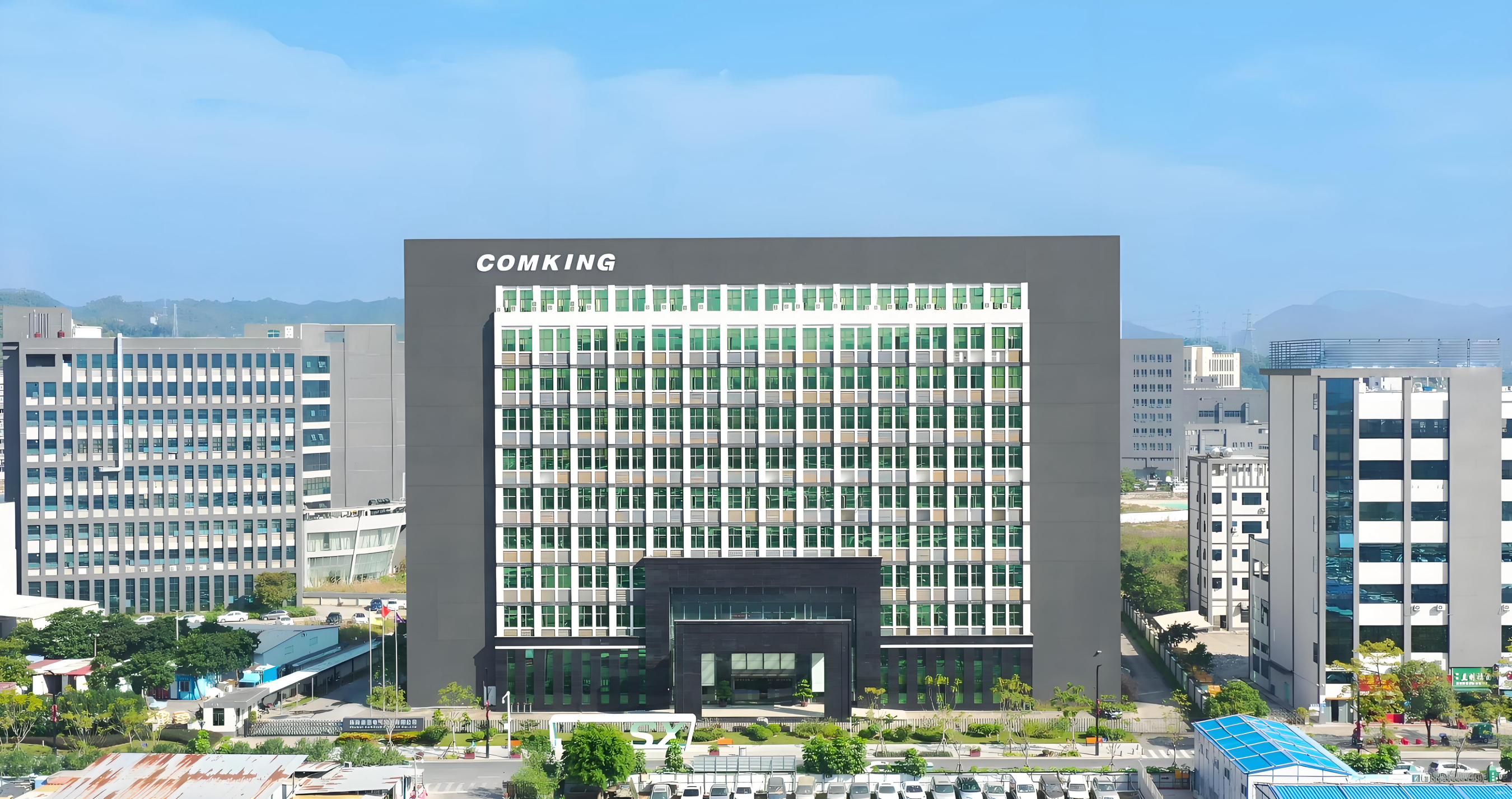
Zhuhai Kangjin Electric Implements R&D Data Management Using SIPM/PLM. 代码
More
Project Background
Zhongyi Technology (Mianyang) Co., Ltd., located in Mianyang—the “City of Science and Technology” in Sichuan Province, China—is a subsidiary of Shanghai Lianying New Energy Technology Co., Ltd. The company was founded by a team of seasoned industry experts driven by vision and a strong sense of mission, at a historic juncture when the global shift toward green development is accelerating and China’s “dual carbon” goals (carbon peak and carbon neutrality) have become a defining theme of our era. As China’s new energy vehicle (NEV) industry rapidly rises and steps into a phase of global leadership, Zhongyi Technology has boldly embraced this trend, aligning itself with the national strategy of “energy conservation, emission reduction, and achieving dual carbon targets,” and committing to a path of technological empowerment in the new energy sector.
With a nationwide footprint, Zhongyi operates R&D centers in Shanghai, Hefei, and Mianyang, dedicated to delivering high-quality products and integrated solutions to the industry. The company also maintains modern manufacturing facilities in Mianyang, Sichuan, and Nantong, Jiangsu. From concept to reality, Zhongyi has built a robust, integrated capability spanning research, development, production, and sales.
Guided by the core philosophy of “technology leadership and innovation-driven growth,” the company places great emphasis on independent R&D of new technologies and products. Its core technologies reflect deep Chinese expertise and broad global relevance. Focusing on the new energy industry, Zhongyi primarily serves three key business segments: high-voltage interconnection systems for new energy vehicles, high-power charging solutions, and electric connectors and thermal management systems for energy storage applications.
Project Objectives
Through the implementation of the SIPM/PLM project, the following objectives will be achieved:
BOM-Centric Management: Establish associative management of technical documentation centered around the Bill of Materials (BOM).
Traceable Change History: Ensure full traceability of all changes made to technical data.
Unified Coding System: Implement standardized, unique coding for materials and technical documents through PLM.
CAD Integration: Integrate the PLM system with CAD design tools to ensure consistency between design data and engineering drawings.
Standard and Common Parts Optimization: Leverage PLM implementation as an opportunity to thoroughly organize standard and common parts, enhancing product and component modularity, standardization, and reuse.
Document Standardization: Improve unified management of product-related drawings and technical documents, and establish standardized document management practices.
Knowledge Accumulation and Management: Establish a knowledge management framework; utilizing the SIPM/PLM knowledge management platform to preserve valuable design concepts and methodologies. Through continuous accumulation, build a scientific and comprehensive knowledge repository to elevate the company’s R&D capabilities.
Implement Unified Coding for Materials and Technical Documents
Through the implementation of SIPM/PLM, a coding management scheme tailored to the company’s operational requirements was established for materials and technical documents. Leveraging SIPM/PLM’s automated coding capability, a “one-item-one-code” principle is enforced, effectively resolving offline coding issues such as duplicate codes for the same item, multiple items sharing one code, and inconsistent or non-standardized coding practices.
_1772678471808.png)
Take PLM Implementation as an Opportunity to Thoroughly Organize Standard and Common Parts
Through the implementation of SIPM/PLM, the company systematically reviewed and organized its standard parts and common components, thereby enhancing product and component standardization, modularization, and reuse.
_1772679163656.png)
Manage Materials, Drawings, and Other Technical Documents with BOM as the Link
By integrating with CAD, the BOM structure is quickly extracted according to the design drawings, and product data is structured and consolidated. Components are linked one-to-one with their corresponding drawings and documents, making it convenient to search for and reference designs.
_1772679583559.png)
Leverage PLM Implementation to Streamline Document Classification
Taking the implementation of the PLM system as an opportunity, the company reviewed and categorized its document types, then established corresponding classification structures within the SIPM/PLM system—enabling clear and organized management of all enterprise documents.
_1772680169664.png)
Enable Online Workflow Routing and Trackable Review Processes
By analyzing and standardizing the company's existing product design review processes and embedding them into the PLM system, the entire approval workflow becomes easily trackable in real time and precisely traceable after completion—providing a critical foundation for future process improvements.
_1772681314485.png)
Enable Paperless Electronic Signatures in the PLM System
By integrating with CAD and leveraging a CAD integration plugin, PDF documents are automatically generated and electronically signed based on objective information from the system’s approval workflow, establishing a solid data foundation for a paperless process.
_1772682309348.png)
Enable Dynamic Management of System Data
Data entry and modifications are automatically timestamped. The system uses this time-based information to update data dynamically in real time, enabling quick and clear identification of monthly data additions and changes.
_1772682595919.png)
Traceable Change History for Technical Data
All changes are centrally managed within the system, ensuring that electronic documents are always up-to-date and valid in real time. The system automatically records the complete change history of all data, generating a detailed change log. Through this change log management, users can effectively trace the history of every modification.
_1772682856989.png)
Permission Management
Establish a comprehensive role-based permission framework to assign access rights according to user roles and enforce data access controls. Through the system's permission management capabilities, enterprise data can be securely and systematically shared within the organization.
_1772683066700.png)
Permission Management
Summary:
Through the successful implementation of PLM, Zhongyi Technology has continuously improved its design and R&D management capabilities—gradually enhancing R&D efficiency, improving design and development quality, and reducing product development costs. All documents and drawings throughout the entire product development process are now centrally managed online, enabling designers to quickly access data and significantly boosting their work efficiency. With the ongoing use of these modules, the PLM system will evolve into a company-wide collaborative management platform spanning all departments.