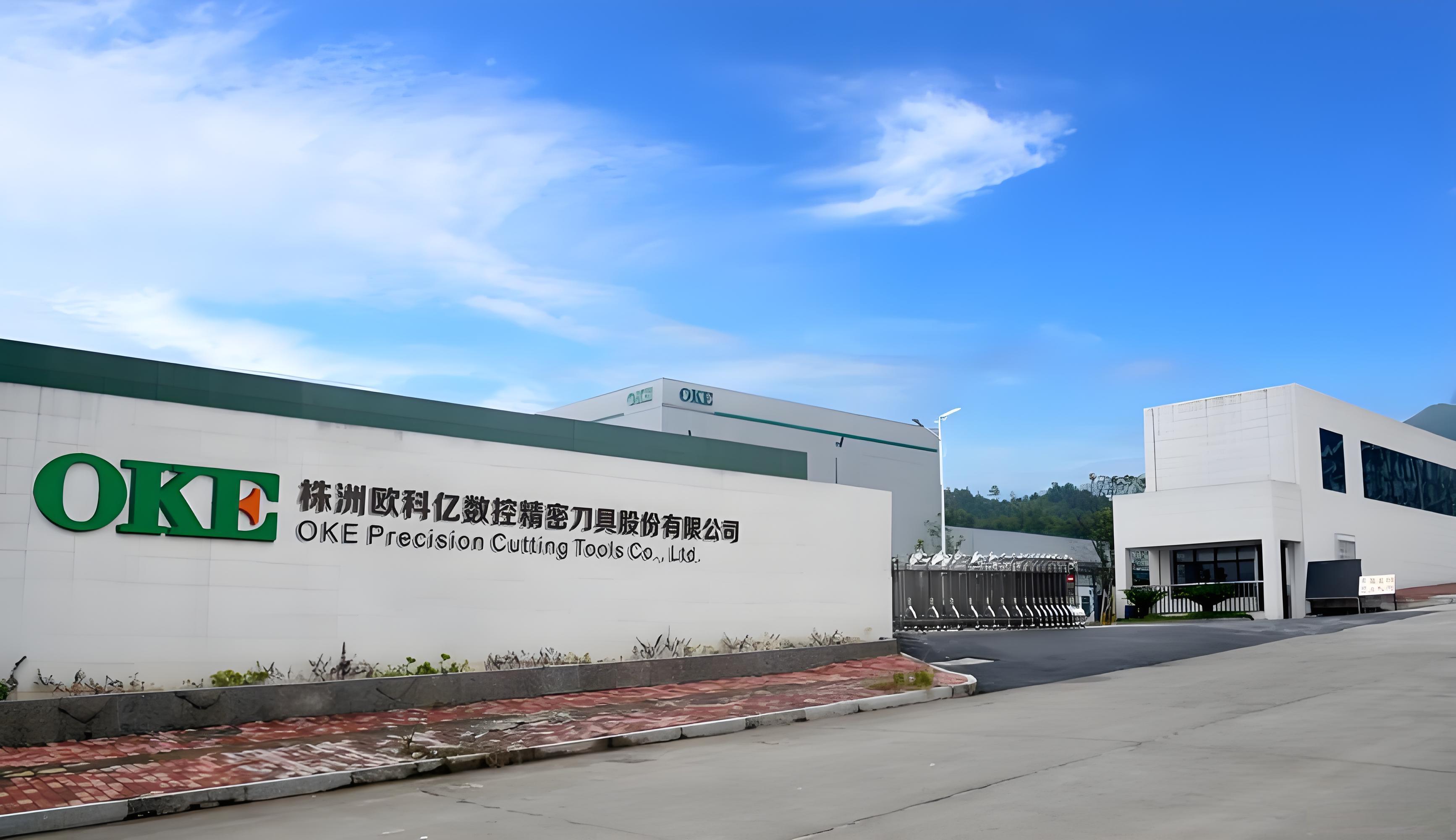
Oukeyi leverages SIPM/PLM to achieve integrated R&D—from tungsten carbide formulation to discrete manufacturing.
More
Project Background
Hunan Dezhi New Material Co., Ltd. (formerly Hunan Dezhi New Material Co., Ltd.) was established in 2017 and is located in Zhuzhou, the "Power Capital." It is a high-tech enterprise specializing in the research, development, production, and sales of carbon-based, ceramic, and other high-end materials. The company was the first to achieve mass production of SiC etching components for semiconductors domestically, possessing advanced technology, equipment, and a highly skilled R&D team. Currently, the company has over 300 employees, with R&D personnel accounting for 20% of the total workforce. Its R&D capabilities and product quality have gained widespread recognition within the industry.
The company's main business involves the production and sales of carbon-based, ceramic, and other high-end materials. Its primary products include CVD@SiC coatings, Solid SiC, Sin@SiC-SiC, CVD@TaC coatings, and other series of products. These are widely used in fields such as LED optoelectronics, integrated circuits, and third-generation semiconductors.
Project Objectives
Through the implementation of the SIPM/PLM system, the following objectives will be achieved:
Material Management: Re-plan a unified material coding system and material management attributes through the PLM system implementation, achieving "one code throughout" (spanning all business processes) within the enterprise.
BOM Management: Establish a data model centered on BOMs, linking and managing technical data outputs from R&D, thereby connecting the interoperability between R&D data and the ERP system.
Project Management: Standardize and implement the APQP product development process and other business processes related to the project management module; standardize the management of input, output, and review documents (ensuring all files are complete, well-organized for archiving, and easy to retrieve), ensuring that each stage of development is recordable and traceable, thus strengthening project management capabilities.
Process Management: Achieve structured data construction for multiple process routes through process analysis, while standardizing the process basic library (such as standard operation libraries and equipment libraries). This paves the way for integrating process data into upstream and downstream business systems.
Workflow Management: Fully leverage the speed and traceability of networks to gradually establish electronic notification, approval, and review mechanisms, avoiding previous errors and omissions associated with manual processes, thereby paving the way for paperless office operations; after system launch, use PLM electronic documents as the sole source for distribution control, prohibiting the approval and distribution of drawing files outside the system, ensuring complete consistency between electronic files and on-site paper documents.
Performance Support Management: Effectively manage project execution standards, progress, and completion status through PLM implementation. Provide different views to meet the project monitoring needs of leaders at all levels of the company. Additionally, provide objective data support for R&D personnel performance evaluations through the task management module.
Knowledge Management: Establish knowledge management specifications for the product lifecycle. Utilize the knowledge base module to build an R&D support library (lessons learned, technical literature, patents, etc.) and the standard document module to build an R&D standards library (national standards, enterprise standards, etc.). Through implementation guidance and usage management methods, accelerate the explicitization of knowledge assets.
ERP Interface: Ensure that the SIPM PLM system provides complete output of data (materials, BOMs, process routes) for ERP reading.
System Business Function Implementation
Through on-site research during the blueprint design phase of the PLM project team, combined with Dezhi New Materials’ actual business requirements and SIPM’s extensive consulting experience, the SIPM implementation team has developed a precise management model tailored for Dezhi New Materials.
I. Project Management
1.Implementation of the PLM project module transforms the offline "person-to-person" supervision management approach into an upgrade that is controllable, traceable, and allows for real-time tracking. By classifying projects by type, the company achieves detailed management of all its projects.
_1786003939939.png)
Project Classification
2、 Project management adopts APQP R&D process templates and order project R&D process template management methods. Example projects are quickly generated from project templates, ensuring standardized project stages and tasks, reducing project planning time, and improving work efficiency.
_1786007411390.png)
3、 The implementation and launch of the project module enable project managers to quickly locate task progress and completion status via Gantt charts, track project progress in real-time, and identify potential project risks in advance.
_1786068131407.png)
Track Gantt Chart
4、The project module tracks project execution status, schedule deviations, and other data across multiple dimensions, and displays them using pie charts, line charts, and bar charts.
_1786071180643.png)
_1786072502299.png)
5、 The project module allows managers to comprehensively view the progress of all ongoing projects from a management perspective.
_1786081587281.png)
II. Structural Design Management
1.Through the implementation of PLM, achieve file management for the product R&D process; realize categorized management of product series, components, technical documents, and knowledge base materials.
_1786083504134.png)
Product Management Data Model
2. Establish standardized component (product) classification according to the defined coding rules, and implement controlled entry of components (products).
_1786085042756.png)
Component Library
3.Display associated drawings and documents, as well as query views, centered on components, with all files and drawings managed in association with the components.
_1786086028956.png)
Associated Diagram
4. Reorganize and optimize product data to achieve optimized control.
_1786087101968.png)
Product Category Management
III. Process Management
1.Structured process routes and processes: SIPMPLM supports multiple process routes, enabling the simultaneous push of multiple process routes to downstream systems through structured management of process parameters, thereby facilitating trial production using multiple processes concurrently.
_1786088475109.png)
Multiple Process Routes
2.Process Basic Library Management: Standardized management of the standard operation library, equipment library, process tooling library, workstation fixture library, and auxiliary material library. Process engineers can directly call data from these basic libraries when drafting process flows, thereby preventing selection errors and improving work efficiency.
_1786089521502.png)
3.Process Route Management: Based on the process flow of components, maintain process routes and manufacturing processes within the PLM system. This facilitates collaboration between design and process engineers, reduces the workload associated with managing process documents, and enables rapid retrieval of process data through established associations.
_1786090781815.png)
Process Structure Model
IV. PDF Factory
Electronic signature and approval processes reduce unnecessary waste and paper document consumption. By integrating standard approval workflows, it enhances the efficiency of design communication while simultaneously recording work status and content in real-time for easy reverse tracing and traceability.
_1786092272123.png)
Automatic Signature for Drawing-to-PDF Conversion
V. PLM-EMP Interface
Through the PLM-EMP interface management, the overall business data flow between PLM design and EMP production is integrated. This ensures the precise transfer of component materials, BOMs, and process data, replacing the manual entry work by engineers in EMP. This improves work efficiency and reduces error rates.
Summary:
The successful implementation of Dezhi New Materials’ SIPM/PLM system has achieved the structuring of design and process data. By leveraging the PLM-EMP interface, material and BOM data were seamlessly integrated with the EMP system, significantly ensuring the consistency of design data. This approach has greatly reduced management costs caused by information discrepancies between design and production.
During the design process, task management was employed, featuring multiple task views for display. Data dashboards were presented through “View Tasks by Status” and “View Tasks by Organizational Structure,” truly realizing the enterprise’s goals for informatization management.