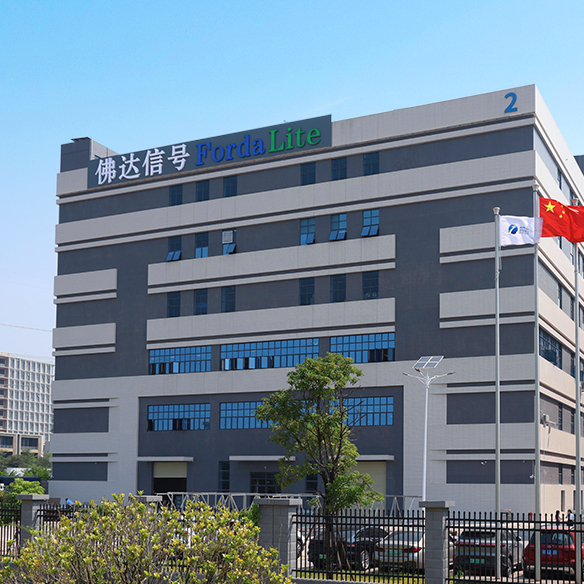
The SIPM/PLM system empowers Foda Signal to achieve refined management in equipment R&D.
More
Project Background
Dalian Innovation Components Manufacturing Co., Ltd. is a key enterprise in Liaoning Province’s automotive industry, a leading company in Dalian’s automotive components sector, a designated national export base for automotive parts, and a state-certified high-tech enterprise. Its business scope encompasses R&D and manufacturing of components for construction machinery and yacht engines, as well as the development and production of parts for commercial vehicles, passenger cars, and electric vehicles, along with logistics and import-export trade. The company operates four major bases: components, castings, complete vehicles, and logistics.
Headquartered in Jinzhou New District, Dalian, the company comprises three business divisions, five wholly-owned subsidiaries, three domestic joint ventures, and four foreign-invested joint ventures.
Project Objectives
Standardize the product development process: Establish standardized management of process documents—including inputs, outputs, and review records—ensuring all documents are complete, systematically archived, and easily accessible. This guarantees that every stage of development is traceable and auditable, thereby strengthening project management capabilities.
Streamline and digitize R&D workflows: Through the implementation of this system, standardize and optimize the company’s design and R&D processes. Achieve end-to-end digitalization of business workflows, including electronic approvals and online digital signatures, laying a solid foundation for future paperless operations.
Implement a unified material coding system: Leverage the PLM system to establish a consistent enterprise-wide part numbering scheme, enabling “one code throughout” (i.e., a single identifier maintained across all business processes). This provides robust BOM data support for deeper integration and broader adoption of production systems.
Ensure single-source control of data: Guarantee the uniqueness of the data source and maintain seamless interoperability between 3D models, 2D drawings, and PLM system data. When associated data is created or modified, changes are made only once, with all related data automatically synchronized.
Establish a knowledge accumulation and management system: Utilize the PLM platform’s knowledge management capabilities to capture and preserve valuable design concepts and methodologies. Through continuous accumulation, build a scientific and comprehensive knowledge repository to elevate the company’s overall R&D capabilities.
I.Product Data Management:
SIPM/PLM’s product data management enables centralized, systematic, and unified management of all product-related data within the company—including components, tooling, and associated documentation. The system ensures the completeness, consistency, and accuracy of enterprise product data, facilitates internal knowledge sharing, enhances reuse of existing knowledge, avoids redundant work, shortens R&D cycles, and improves design and development quality.
Finished products and components are classified in an organized and structured manner to ensure orderly management.
By leveraging the coding management module of the SIPM/PLM system, the company has established a standardized coding system for parts and documents. Codes are automatically generated according to predefined rules, effectively eliminating the risk of duplicate codes assigned to different items at the source.
_1773023322229.png)
Coding Management
Establish the company's knowledge system by categorizing content into different types, facilitating employee access, sharing, and reference, thereby supporting standardized documentation practices.
_1773025529382.png)
Knowledge Base
After design documents undergo the system’s review and approval workflow, signed PDF drawing files are automatically generated.
_1773027207295.png)
Document Signing
Standardized business processes enable standardization of the company’s product development workflow. Visualized review and approval processes enhance operational efficiency, ensuring transparency and effectiveness in signing and approval tasks.
_1773027826735.png)
Review and Approval Process
Extract the BOM from 2D drawings, using the design BOM as the central reference and integrating all data in a structured format to achieve effective control over all design data.
_1773028599478.png)
BOM Management
II. Process Management
Basic Process Library Management
The basic process library systematically records all in-house process-related data—including operations, operation resources, tooling, and equipment—enabling efficient reuse when creating process routes.
_1773034060461.png)
Standard Operation and Step Library
_1773035191307.png)
Equipment Library
Process Route Creation
Detailed process routes are established to guide downstream production departments, including manufacturing operations, steps, characteristics, and tooling. Comprehensive, structured process data enables the generation of relevant process reports.
_1773035694575.png)
Process Route
III. Change Management:SIPM/PLM provides complete and detailed change records, enabling control over the entire change process and supporting efficient change traceability and queries. Change management is governed through project management methodologies to monitor both the change initiation and its implementation. All process data managed by the system—including parts, drawings, BOMs, and documents—supports fully traceable change history.
Document Version Management
Clear BOM Change Tracking, including structural comparison to highlight differences before and after the change.
_1773036270485.png)
BOM Change
IV. Report Management
Generate reports based on design requirements, directly extracted from the BOM structure.
_1773037401420.png)
Full-level BOM Detail Report
In addition, there are more than ten other reports, including Control Plans, Tooling Lists, Self-Inspection Records, and Special Inspection Records.
_1773037729441.png)
Process-Required Reports
V. ERP Interface Management: PLM-ERP Integration
Through PLM-ERP interface management, the end-to-end business data flow between PLM (design) and ERP (production) is seamlessly connected, ensuring accurate transmission of design BOMs and process route data.
_1773038792901.png)
Generate PBOM Package
VI. WeCom (Enterprise WeChat) Interface Management
Through the PLM–Enterprise WeChat integration, PLM notifications and pending tasks are synchronized to Enterprise WeChat, enabling users to review, approve, and receive alerts for to-do items on both desktop and mobile devices.
_1773039106052.png)
Mobile Approval and Review
VII.Requirements Management
Classify requirements by type to ensure organized and systematic management.
_1773039793850.png)
Requirement Classification
Sales managers create requirements and upload relevant sales documentation. After review and approval, a New Product Development Notification Form is uploaded to initiate the project.
_1773040299997.png)
Requirements Management
VIII.Project Management
Before implementing SIPM/PLM Project Management:
There was no clear classification of project types, resulting in inconsistent approaches across teams ("a different process for every person").
Insufficient control over project deliverables and approval workflows, making it difficult to ensure a controllable R&D process and complete, consistent outputs.
Projects were primarily managed by project managers using spreadsheets, leading to low visibility and lack of control over execution. Management efficiency was low, and product development processes—though documented—were not standardized across the company.
After implementing SIPM/PLM Project Management:
Project Template Classification
_1773041086420.png)
Project Template Classification
Retrieve project templates based on usage scenarios.
_1773041442562.png)
Project Template Retrieval
Project Classification and Control
_1773041973705.png)
Project Classification
Project managers use Gantt charts to track the execution progress of tasks, providing a more intuitive display of project progress.
_1773042788736.png)
Tracking View
IX. FMEA Management
FMEA Base Library Management
The base PFMEA library consolidates product characteristics, process characteristics, potential failures, and preventive measures accumulated from design and production processes.
_1773043264242.png)
Product Characteristics
_1773043281109.png)
Process Characteristics
_1773043572069.png)
PFMEA Failure Mode Library
_1773044469592.png)
PFMEA Prevention Measures Library
_1773044601998.png)
PFMEA Severity
_1773044824574.png)
PFMEA Occurrence
_1773046039933.png)
PFMEA Detection
Conduct PFMEA analysis by building an FMEA structure tree, calculate risk levels, and add corresponding actions; then generate output result documents.
_1773046781072.png)
FMEA Structure Tree
_1773048553752.png)
PFMEA Output Report
Summary:
Through the successful implementation of PLM, Dalian Innovation Components Manufacturing Co., Ltd. has continuously improved its design and R&D management capabilities, progressively enhancing R&D efficiency and quality while reducing product development costs. The company has achieved centralized online management of all documentation, drawings, and process data throughout its product development lifecycle. This enables design engineers to quickly access and utilize data, significantly boosting their work efficiency.